
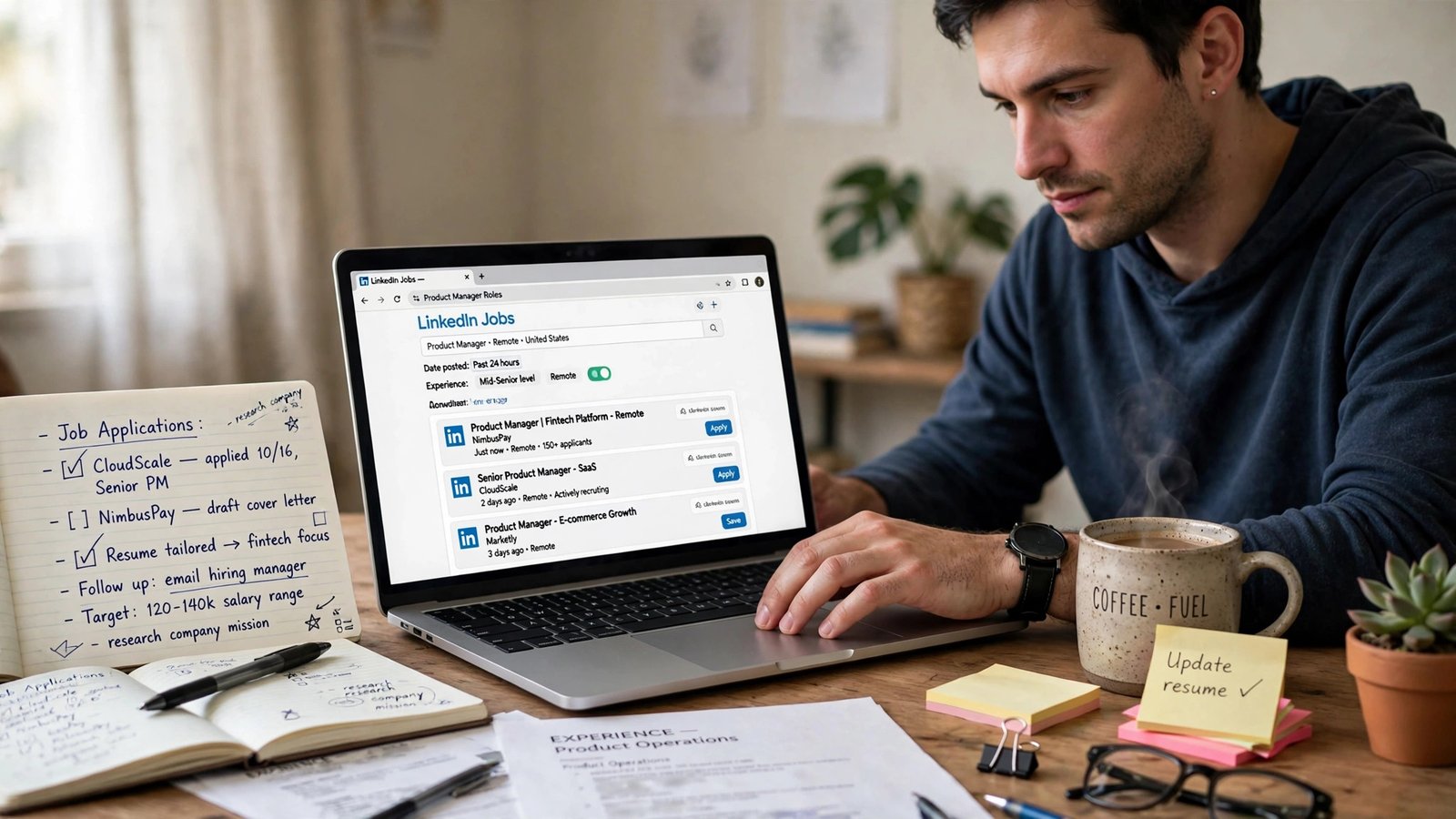
The job market of 2026 doesn’t reward the job seekers of 2016. AI screens most applications before human eyes see them, “easy apply” buttons have flooded recruiters with noise, and the average corporate posting now draws hundreds of applicants. Spraying resumes into portals — the old playbook — has the lowest ROI of any job-search method.
But speed is still possible. The fastest hires in 2026 share a pattern: they bypass the application black hole, lead with proof of skill, and treat the search like a sales pipeline. Here’s the accelerated playbook, in order of impact.
Step 1: Fix the Resume for the Machines (Day 1)
Before anything else, make your resume machine-readable — because in 2026, the machine reads first:
- Mirror the job posting’s language: applicant tracking systems match keywords. If the posting says “client onboarding” and your resume says “customer setup,” the ATS may not connect them. Use their terms.
- Simple formatting: no tables, text boxes, graphics, or fancy templates — ATS parsers choke on them. Clean headings, standard fonts, reverse chronological.
- Quantified bullets: every bullet should carry a number — revenue influenced, costs cut, time saved, team size, percentage improvements. Numbers survive both algorithms and skims.
- Skills section up top: a scannable keyword block helps both the ATS and the 6-second human skim.
Understanding how AI screening actually works turns the ATS from a mysterious gatekeeper into a checklist you can satisfy in an afternoon. And using AI tools to strengthen your resume (for drafting and keyword-matching, not fabricating) speeds this step dramatically.
Step 2: Work Your Network Before the Portals (Days 1–3)
Referrals remain the fastest path to hire — referred candidates get interviews at dramatically higher rates and move through pipelines faster. But “networking” doesn’t mean awkward coffee chats with strangers:
- Warm outreach first: message former colleagues, classmates, and managers: “I’m exploring [X roles] — if you hear of anything at [company], I’d appreciate a pointer.” Specific asks get responses; vague ones don’t.
- Alumni and community channels: university alumni networks, professional Slack/Discord communities, and industry groups are referral-rich and underused.
- The 15-minute ask: request brief informational chats with people in target roles — not asking for a job, asking for insight. Many convert to referrals organically.
- Reciprocate visibly: share useful articles, make introductions, comment thoughtfully on posts. Givers get remembered.
Set a daily target: 5 outreach messages a day. In two weeks, that’s 50 warm touches — more pipeline than a month of portal applications.
Step 3: Target, Don’t Spray (Ongoing)
Speed comes from focus. Build a target list of 20–30 companies — not 200 applications:
- Filter for hiring signals: recent funding, expansions, new office openings, leadership hires in your function — companies in growth mode hire faster.
- Customize per application: one tailored application to a target company beats ten generic ones. Mirror their language, reference their actual challenges.
- Apply within 48 hours of posting: early applicants get disproportionate attention before the pile grows.
- Follow the posting’s instructions exactly: if they ask for a portfolio link or a specific subject line, it’s a compliance test.
The Bureau of Labor Statistics’ employment projections help you aim at growing occupations rather than shrinking ones — targeting a growing field is itself a speed advantage.
Step 4: Lead With Proof, Not Promises
In 2026, the candidates who get hired fastest show their work:
- Portfolio over promises: designers show designs; writers show writing; analysts show dashboards; developers show repos. No portfolio? Build a small one in a weekend — a case study of a past project counts.
- The value-add outreach: instead of “I’d love to work for you,” try “I noticed your checkout flow has [specific issue] — here’s a 2-minute teardown of how I’d approach it.” Hiring managers remember this.
- Skills-based assessments: many companies now use work-sample tests. Treat them as your audition — they’re often weighted more than interviews.
- Public proof: thoughtful LinkedIn posts about your craft, open-source contributions, or a short “build in public” series make you discoverable to recruiters searching for talent.
Step 5: Run It Like a Pipeline (Daily Discipline)
Treat the search as a sales process with metrics:
- Daily inputs: 5 outreach messages, 2–3 tailored applications, 1 follow-up on a previous application.
- Track everything: a simple spreadsheet — company, role, date applied, contact, status, next action. Follow up once after 7–10 days of silence; then move on.
- Interview prep as a system: prepare your stories (situation-action-result format) once, then reuse. Research each company for 30 minutes — their news, their competitors, the interviewer’s background.
- Keep skills sharp: an hour a day of learning or building beats anxious refreshing of job boards.
Speed compounds: each interview sharpens the next, each tailored application teaches you the market’s language. Most successful 2026 job searches that land within 4–8 weeks follow this cadence — not because of luck, but because of pipeline math.
The Hidden Job Market: Tapping Unposted Roles
A large share of roles are filled without ever being posted — through referrals, internal moves, and created positions. Accessing this market is the ultimate speed hack:
- Targeted speculative outreach: identify 10–15 companies where you’d genuinely add value, find the hiring manager (not HR) on LinkedIn, and send a concise value proposition: who you are, the specific problem you can solve for them, and one proof point. Response rates of 10–20% are normal — that’s 2–3 conversations from an afternoon’s work.
- Ask about unposted needs: in every networking conversation, ask “what’s the hardest role to fill on your team right now?” — you’ll hear about openings weeks before they’re posted, if they’re posted at all.
- Contract-to-hire as a wedge: many “unpostable” needs get filled with contractors first. Staffing firms in your niche know about these before anyone else — build relationships with 2–3 specialist recruiters.
- Alumni hiring channels: university career offices, bootcamp employer networks, and professional association job boards list roles that never reach LinkedIn or Indeed.
- Follow the money: companies that just raised funding, won big contracts, or announced expansions are hiring — often before postings go live. Set news alerts for your target list.
The hidden market rewards initiative over applications. One well-researched speculative email outperforms fifty portal submissions — it’s not even close.
Shortcuts Worth Taking (and Ones to Skip)
Worth it: staffing agencies and recruiters in your niche (they’re paid by employers, so they’re free to you); contract-to-hire roles (faster decisions, foot in the door); USAJobs.gov for federal roles with structured hiring; employee referral bonuses make your employed friends motivated allies.
Skip: paying for “guaranteed placement” services; mass-applying via one-click tools (low conversion, and some employers filter them); lying about skills or employment (background checks in 2026 are thorough and automated).
Frequently Asked Questions
How long does it take to find a job in 2026?
With a focused pipeline approach, 4–8 weeks is realistic for in-demand roles; the national average hovers around 3–5 months for traditional searches. Your timeline depends heavily on field, seniority, and how targeted your search is.
Is it better to apply to many jobs or few?
Few, well-targeted. Ten tailored applications outperform a hundred generic ones — higher response rates, better interview conversion, and less burnout. Quality compounds; quantity just tires you out.
Should I use AI to write my applications?
Use AI for drafting, tailoring, and proofreading — not for fabricating experience. Recruiters increasingly spot AI-generated generic content; the winning move is AI-assisted drafting plus your genuine voice and specifics.
How important is LinkedIn in 2026?
Very — it’s the primary recruiter sourcing channel. An optimized headline (role + specialty + value), detailed experience with metrics, skills endorsements, and the “open to work” signal (visible to recruiters only, if you’re employed) measurably increase inbound interest.
The Bottom Line
The fastest way to find a job in 2026: make your resume ATS-proof on day one, activate your network before touching portals, target 20–30 companies with tailored applications, lead with proof of skill, and run daily pipeline discipline. It’s not about working harder — it’s about aiming where the hiring actually happens.