
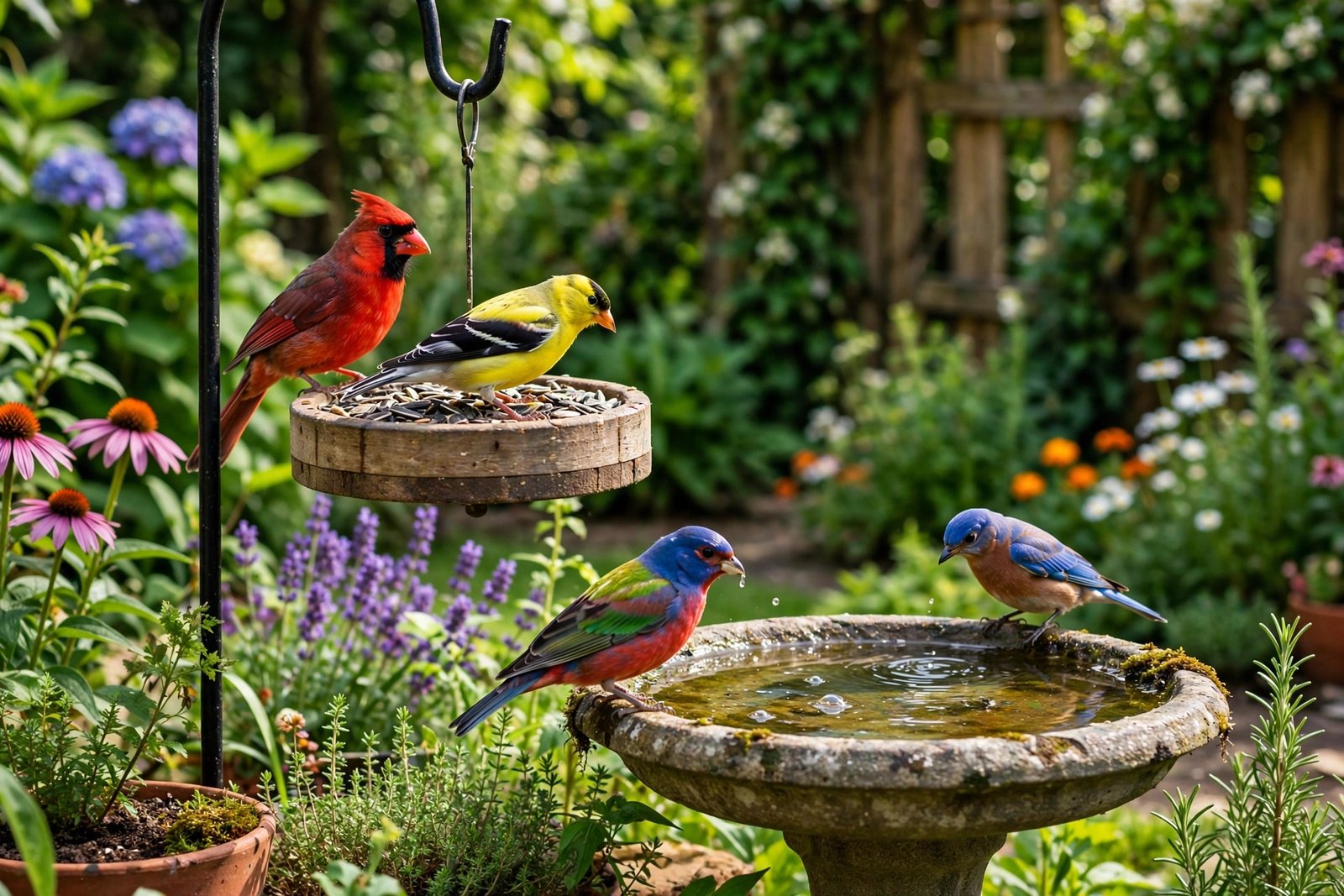
A backyard full of birdsong is one of life’s quiet luxuries — and it’s entirely buildable. Birds need just four things: food, water, shelter, and nesting sites. Provide them and your yard becomes a destination. Most people try feeders alone and wonder why results disappoint; the magic is in the full habitat. Here’s how to build it.
The Four Essentials
Food: different birds eat different things — offer variety. Black-oil sunflower seeds attract the widest range (cardinals, chickadees, finches, nuthatches). Nyjer (thistle) brings goldfinches. Suet feeds woodpeckers and wrens in winter. Peanuts attract jays and titmice. Avoid cheap mixed seed with red millet — most birds scatter it uneaten, and it sprouts weeds. Water: more powerful than food for attracting birds — a simple birdbath with fresh water draws species that never visit feeders. Moving water (a dripper or small solar fountain, $20–$30) multiplies the effect; birds hear it from afar.
Shelter: birds need cover from predators and weather — dense shrubs, evergreens, brush piles, and layered plantings. A sterile lawn with one feeder is a drive-through; a layered yard is a neighborhood. Nesting sites: nest boxes (sized per species — wrens, chickadees, bluebirds all use different dimensions), dense shrubs, and dead trees or snags if you can keep one safely. The National Audubon Society offers free native-plant guides by zip code — the single best resource for bird-friendly landscaping.
Feeder Strategy: Location and Hygiene
Placement: within 3 feet of windows (birds can’t build lethal speed) or more than 30 feet away — the in-between zone causes window strikes. Near cover (within 10 feet of shrubs) so birds can flee hawks. Variety of feeders: tube feeders for sunflower, mesh socks for nyjer, suet cages, platform feeders for ground feeders like juncos and doves. Different feeders, different birds.
Hygiene is critical: dirty feeders spread disease (salmonellosis, conjunctivitis outbreaks have killed thousands of finches). Clean feeders monthly with 10% bleach solution, rake up hulls under feeders, and space feeders to reduce crowding. If you see sick birds (puffy, lethargic), take feeders down for two weeks — it’s the responsible move. Quality seed from reputable sources matters; the Cornell Lab of Ornithology tracks feeder-bird health and offers evidence-based guidance.
Native Plants: The Real Bird Magnet
Here’s the secret the seed companies won’t tell you: native plants outperform feeders for attracting birds long-term. Native trees and shrubs host the caterpillars and insects that 96% of backyard songbirds feed their babies — a chickadee pair needs 6,000+ caterpillars to raise one brood, and non-native ornamentals host a fraction of the insects natives do. Feeders supplement adults; native plants raise families.
Top bird plants by region (natives vary — check Audubon’s zip-code tool): oaks (the undisputed champion — hundreds of caterpillar species), native cherries and serviceberries (fruit), coneflowers and sunflowers (seed heads — leave them standing through winter), native grasses (cover and seed), and berry producers (dogwood, viburnum, elderberry). Leave the leaves: fallen leaves shelter the insects birds eat; “cleaning up” too thoroughly starves the food web. A slightly messy yard is a living yard. This pairs beautifully with low-maintenance landscaping ideas for beginners — natives need less care and attract more birds.
Water Features on Any Budget
A basic birdbath ($30–$60) with 1–2 inches of water and a textured surface (birds need footing) works immediately. Refresh water every 2–3 days — stagnant water breeds mosquitoes (a wiggler/agitator prevents this). Upgrade path: add a solar dripper or fountain pump for moving water; build a small recirculating stream if ambitious. In winter, a heated birdbath ($40–$60) becomes the neighborhood’s only water source — you’ll see species that ignore you all summer.
Placement: near cover but with open sightlines (birds need to spot cats), on level ground, with a nearby perching branch. And keep cats indoors — free-roaming cats kill an estimated 2.4 billion birds yearly in the US alone. If neighborhood cats visit, place feeders where cats can’t ambush (no low shrubs directly beneath) and consider a catio conversation with the owners. The National Wildlife Federation’s Certified Wildlife Habitat program recognizes yards that provide all four essentials.
Backyard Design for Birds and People
You don’t have to choose between a beautiful yard and a birdy one. Layer it: canopy trees, understory shrubs, perennial beds, ground cover — each layer houses different species. Privacy plantings double as bird shelter; see how to make your backyard more private without a fence — the same hedges screen you and shelter them. Reduce lawn: every 10×10 foot of lawn converted to native bed measurably increases bird visits; lawn is a food desert.
Kill the pesticides: insecticides starve birds directly (fewer insects) and poison them indirectly. Accept some chewed leaves — they’re evidence the food web works. A yard with perfect foliage and no birds has missed the point entirely.
Dealing With Unwanted Visitors
Build it and everyone comes — including guests you didn’t invite. Squirrels: the eternal war — baffles on poles, weight-activated feeders, safflower seed (squirrels dislike it, birds don’t), and a dedicated squirrel feeder as a peace offering. Accept that squirrels will win some battles; the goal is management, not victory. Starlings and grackles: aggressive flocks that empty feeders — switch to safflower and nyjer (they dislike both), use caged feeders that exclude large birds, and avoid platform feeders during invasions.
Hawks: a Cooper’s hawk hunting your feeders is nature working — but you can reduce kills by placing feeders near escape cover and avoiding ground-feeding concentrations. Rats and mice: the serious concern — never let seed accumulate on the ground, use seed trays, bring feeders in at night if rats appear, and switch to no-mess hulled sunflower (less waste = fewer rodents). Bears: in bear country, take feeders down at night and during spring/fall — a fed bear is a dead bear. Manage the whole ecosystem, not just the pretty parts.
Conclusion
Attracting birds to your backyard means providing all four essentials — varied food, fresh (ideally moving) water, layered shelter, and nesting sites — with native plants doing the heaviest lifting. Keep feeders clean, ditch pesticides, keep cats indoors, and be patient: habitat-building compounds. Within a season, your mornings will sound different.
Frequently Asked Questions
What’s the best bird seed to attract the most species?
Black-oil sunflower seeds — cardinals, chickadees, finches, nuthatches, and more all eat them. Add nyjer for goldfinches and suet for woodpeckers in winter. Skip cheap mixes with red millet.
How do I keep squirrels off my bird feeders?
Use squirrel-proof feeders (weight-activated), mount feeders on poles with baffles, place them 10+ feet from launching points, and offer squirrels their own corn station as a distraction. Safflower seed also deters squirrels while birds eat it happily.
Do I need a birdbath if I have feeders?
Water attracts more species than food — many birds that ignore feeders visit water. A simple birdbath with fresh water, ideally with a dripper for movement, is the highest-ROI bird attraction there is.
When will birds start coming to my new feeders?
Usually 2–4 weeks for discovery, longer in sparse areas. Be patient and keep feeders filled — once scout birds find reliable food and water, word spreads fast and visits compound.
How do I stop bully birds from hogging the feeder?
Offer foods bullies dislike (safflower, nyjer), use caged or weight-activated feeders that exclude large birds, and add multiple feeder stations — spread-out resources reduce monopolizing.