
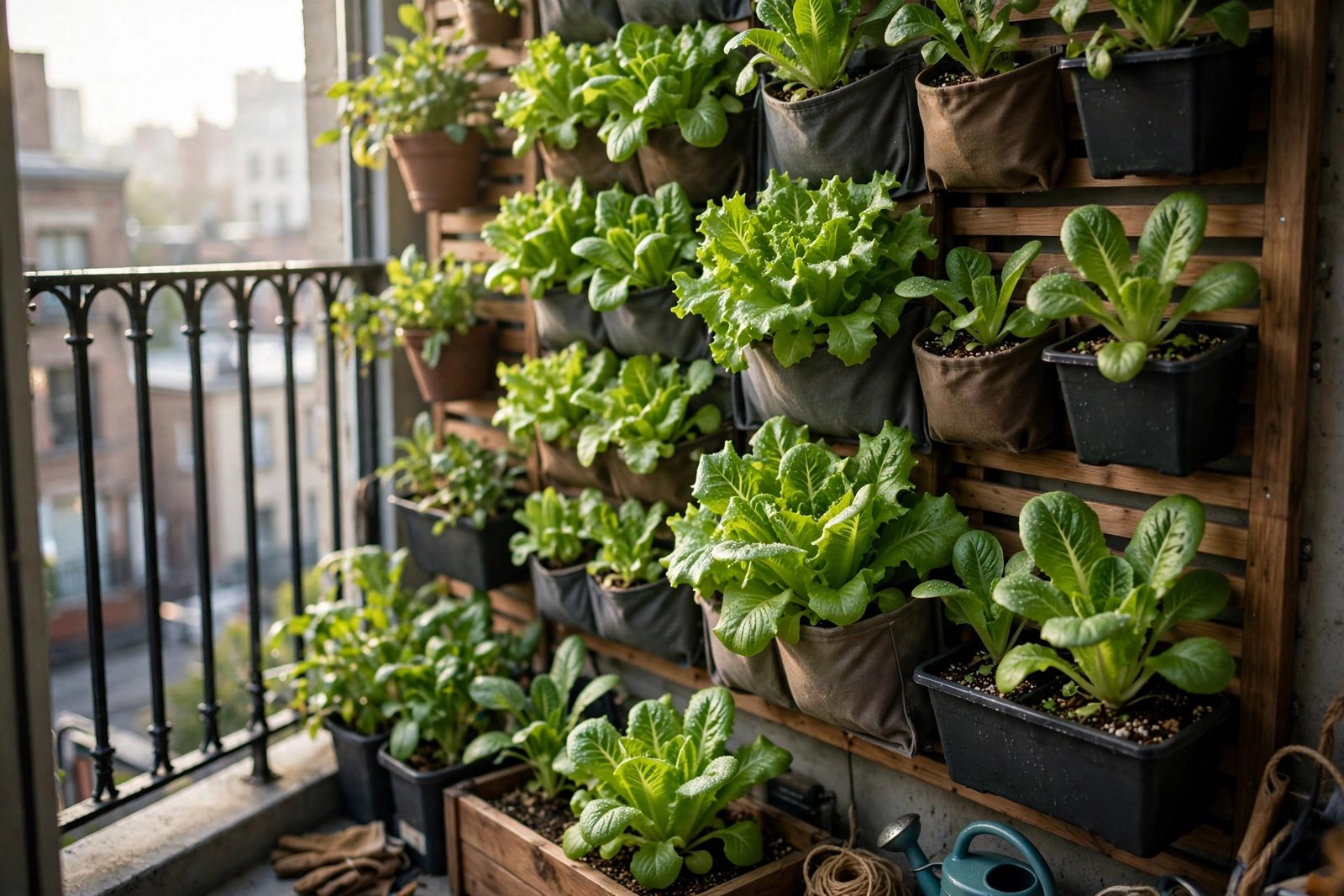
Lettuce is the perfect small-space crop: shallow-rooted, fast (ready in 30–45 days), and harvestable leaf by leaf for weeks. A single window box can produce salads all season. Yet beginners routinely fail with lettuce — it bolts, turns bitter, or barely grows. The secrets are variety choice, timing, and the cut-and-come-again method. Master those and small-space lettuce becomes nearly foolproof.
Choose Small-Space Varieties
Variety matters more than technique. Loose-leaf types (Salad Bowl, Oakleaf, Black-Seeded Simpson) are the small-space champions — harvest outer leaves while the center keeps growing, no head formation needed. Butterheads (Buttercrunch, Tom Thumb — the latter bred specifically for containers) form small, tender heads in tight quarters. Romaine minis (Little Gem) give crunch in half the space of full-size romaine.
Avoid: full-size iceberg and large romaine — they need space and time small gardens don’t have. Mesclun mixes (pre-mixed salad blends) are the ultimate beginner move: scatter, thin, harvest in 3–4 weeks, resow. Heat-tolerant varieties (Salanova, Summer Crisp types) extend your season past spring — standard lettuce bolts (flowers and turns bitter) when temperatures consistently exceed 75°F. Check The Old Farmer’s Almanac for variety recommendations matched to your region, or your local extension service for trialed varieties proven in your state.
Containers: Shallow and Wide Wins
Lettuce roots run 4–6 inches deep — shallower than almost any vegetable. That means wide, shallow containers: window boxes, trough planters, even repurposed storage tubs with drainage holes. A 2-foot window box holds 8–10 lettuce plants — a serious salad factory. Vertical options: stacked planters, gutter gardens mounted on walls, and tower planters multiply growing area in tiny footprints.
Use quality potting mix (never garden soil in containers), and don’t skimp on size — bigger containers hold moisture more evenly, and lettuce hates drying out. Self-watering planters are worth their price for lettuce; consistent moisture is the difference between sweet and bitter. Balcony growers can combine lettuce with other crops — see how to start a garden on a small apartment balcony for full small-space systems. And if you’re new to indoor growing generally, low-maintenance houseplants for beginners build the same watering instincts.
Sowing and Succession: The Endless Salad System
Direct sow — lettuce transplants poorly, so sow seeds where they’ll grow: scatter on moist soil, cover with 1/4 inch of mix, keep damp until germination (3–10 days). Thin seedlings to 4–6 inches apart (loose-leaf) or 8 inches (heads). Yes, thinning feels wasteful — eat the thinnings as microgreens.
Succession sowing is the whole game: sow a small batch every 2 weeks from early spring through late summer. As one planting peaks, the next is coming up; as summer heat threatens, new sowings take over. In fall, sow cold-hardy varieties under cover for winter harvests. One 2-foot box sown in succession feeds a salad-a-day habit for one person from April to November. Timing tricks: start seeds indoors 2–3 weeks before last frost; sow heat-tolerant varieties for summer; use shade cloth (30–50%) in heat waves — it drops leaf temperature dramatically and delays bolting by weeks.
Water, Feed, and Pest Patrol
Lettuce is 95% water — inconsistent watering makes it bitter and tough. Keep soil evenly moist (not soggy): mulch containers with straw or shredded leaves to retain moisture, and water in the morning. A half-strength liquid feed every 2–3 weeks keeps growth vigorous; nitrogen is the key nutrient for leaves.
Slugs and snails are enemy number one — they can erase seedlings overnight. Defenses: copper tape around containers, beer traps, evening patrols with a flashlight, and iron-phosphate bait (pet-safe). Aphids cluster on undersides — blast with water or introduce ladybugs. Bolting: when a central stalk shoots up, the plant is done — harvest immediately (leaves turn bitter within days) and sow fresh. Shade and consistent water delay it; nothing prevents it forever in heat.
Harvest: Cut-and-Come-Again
The method that makes lettuce a perennial harvest: cut outer leaves first, taking no more than a third of the plant, always leaving the growing center intact. Harvest in the morning for crispness. A loose-leaf plant harvested this way produces for 6–8 weeks. Alternatively, cut the whole head an inch above the base — many varieties regrow a second (smaller) head. For mesclun, shear the whole patch at 3–4 inches tall with scissors; it regrows for 2–3 cuttings.
Wash in cold water, spin or pat dry (wet lettuce rots in days; dry lettuce lasts a week+), and store with a paper towel in a sealed container. Homegrown lettuce, eaten within hours of picking, tastes nothing like the bagged stuff — sweeter, crisper, alive. That’s the real payoff of the small-space salad garden.
Growing Lettuce Through Winter
Lettuce is surprisingly cold-hardy — many varieties survive into the 20s°F, and with protection, harvests continue all winter. Cold frames and cloches: a simple cold frame (an old window over a wooden box) keeps soil 10–20°F warmer than air; sow cold-hardy varieties (Winter Density, Rouge d’Hiver, arugula) in fall for winter picking. Row cover: floating fabric over containers adds several degrees of protection and is nearly free.
Indoors under lights: lettuce is arguably the best indoor winter crop — 12–14 hours of LED light, cool room (60–65°F ideal; heat makes it bitter), and you’ll harvest all winter. Growth slows in short days, so sow a little extra. Winter lettuce is often the sweetest of the year — cold converts starches to sugars as a natural antifreeze, a phenomenon gardeners call “cold-sweetening.”
Companion Planting for Small-Space Lettuce
In tight quarters, every plant should earn its place twice. Good companions: radishes (sprout fast, mark rows, harvest before lettuce needs the space), carrots (slow to germinate, share space well), chives and garlic (repel aphids), marigolds (deter pests, add color). The three-sisters-mini: lettuce under taller crops — plant lettuce on the shady side of tomatoes or peppers; the shade delays summer bolting, and the lettuce uses space the big plants waste.
Avoid: planting lettuce where brassicas just grew (shared pests), and crowding so tightly that airflow dies (mildew loves still, damp air). In containers, interplanting turns one pot into a polyculture — a window box of lettuce edged with chives and dotted with radishes out-produces a monoculture and looks beautiful doing it.
Conclusion
Growing lettuce in small spaces works with compact loose-leaf varieties, wide shallow containers, succession sowing every two weeks, consistent moisture, slug defenses, and cut-and-come-again harvesting. A single window box, managed this way, produces fresh salads for months. It’s the fastest reward in gardening — seed to salad in a month.
Frequently Asked Questions
Why is my lettuce bitter?
Usually heat stress or bolting — temperatures above 75°F trigger bitterness. Grow heat-tolerant varieties in summer, use shade cloth, water consistently, and harvest in the morning.
How often should I water container lettuce?
Daily in warm weather — containers dry fast. Keep soil evenly moist but not soggy; mulch helps enormously. Wilting at midday that recovers by evening is normal; persistent wilt means water now.
Can I grow lettuce indoors?
Yes — it’s one of the best indoor edibles. Give it 12+ hours of grow-light daily, keep temperatures cool (60–70°F ideal), and harvest outer leaves. No pollinators needed.
What does cut-and-come-again mean?
Harvesting outer leaves while leaving the growing center intact, so the plant keeps producing for weeks. Take no more than a third at once, and one planting yields for 6–8 weeks.