
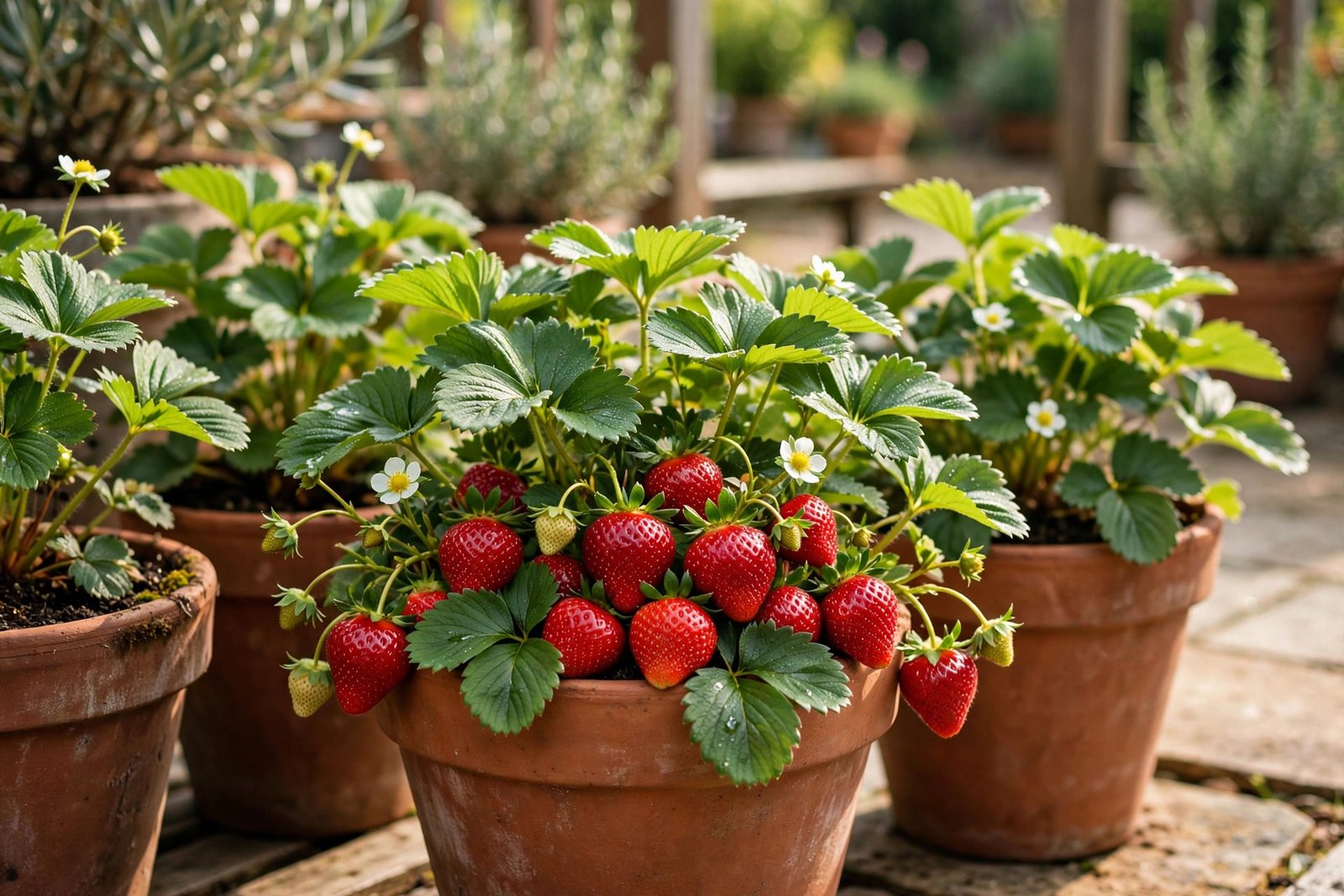
Homegrown strawberries taste nothing like store-bought — the grocery kind are bred for shipping, picked unripe; yours will be sun-warmed, fragrant, and sweet enough to eat standing up. And strawberries are superb container plants: compact, shallow-rooted, and productive for years. Here’s how to grow them in pots successfully, from variety choice to winter care.
Choose Container-Friendly Varieties
Strawberries come in three fruiting types. Everbearing (Albion, Seascape, Ozark Beauty) produce spring through fall — the best choice for pots, giving continuous harvests. Day-neutral (similar to everbearing, less fussy about day length) also excel in containers. June-bearing (Earliglow, Jewel) give one huge early-summer crop — spectacular but brief, and they produce masses of runners that overwhelm pots.
For containers, everbearing/day-neutral win decisively. Alpine strawberries (tiny, intensely flavored, no runners) are the connoisseur’s container choice — small fruits, enormous taste, perfect for small pots. Buy certified disease-free plants from reputable nurseries (like Stark Bro’s); grocery-store or bargain plants often carry viruses that doom the planting. Time your planting with The Old Farmer’s Almanac frost-date charts for your region. One plant per gallon of soil is the rule — a 12-inch pot holds 3 plants comfortably.
Pots, Soil, and Planting
Pot size matters: minimum 12 inches wide and 8+ inches deep per 3 plants; bigger is better — large pots buffer water and temperature swings. Strawberry jars and towers (pots with side pockets) look charming but dry out fast and stress plants; standard wide pots outperform them. Hanging baskets work beautifully for everbearing types — fruits dangle free of soil, staying clean and rot-free.
Soil: rich, slightly acidic (pH 5.8–6.5), fast-draining potting mix with compost. Strawberries hate wet feet — ensure generous drainage holes and never let pots sit in saucers of water. Planting depth is critical: set the crown (where leaves meet roots) exactly at soil level. Too deep rots the crown; too shallow dries the roots. This single detail kills more strawberry plantings than anything else. Sun: 6–8+ hours of direct sun for sweet fruit; less sun means more leaves, fewer berries. Mulch the surface with straw or pine needles to keep fruits clean and soil moist — the technique behind the name “straw-berry.”
Water, Feed, and Runner Management
Containers dry fast, and strawberries are thirsty — inconsistent water means small, misshapen berries. Water daily in warm weather (twice daily in heat waves), keeping soil evenly moist. Drip irrigation or self-watering pots are worth it for serious growers. Feeding: strawberries are heavy feeders in confinement — half-strength balanced liquid fertilizer every 2 weeks from spring through August, plus compost top-dressing in spring. Stop feeding by September to let plants harden for winter.
Runners (the long stems that sprout baby plants) drain the mother plant’s energy. For maximum fruit: snip runners as they appear in year one. In year two+, let 2–3 runners root in adjacent small pots to replace aging mothers — strawberry productivity peaks in years 2–3 and declines after. This rolling renewal keeps the patch perpetually young. Remove old, yellowing leaves regularly for airflow; crowded foliage invites disease. Container growers can combine berries with other crops — see how to start a garden on a small apartment balcony — and the watering discipline transfers from low-maintenance houseplants care.
Pests, Problems, and Protection
Birds are the classic thief — net your pots with bird netting once fruits blush; it’s the only reliable defense. Slugs love low-hanging fruit — elevate pots, use copper tape, patrol at dusk. Gray mold (botrytis): the fuzzy gray rot of damp conditions — improve airflow, water at soil level, remove affected fruits immediately, mulch to keep berries off soil.
Renovation: after the June-bearing harvest (or in late summer for everbearers), mow foliage to 1–2 inches, thin crowded plants, top-dress with compost. It looks brutal; plants rebound vigorously. Winter care: potted strawberries need protection — roots in pots freeze harder than in-ground roots. In zones below 0°F, move pots to an unheated garage or bury pots in mulch; in milder zones, cluster pots together against a sheltered wall and mulch heavily. Water sparingly through winter — dormant, not dead.
Harvest: The Sweet Payoff
Pick berries fully red — they don’t ripen after picking (that’s why store berries taste like cardboard). Harvest every 2 days in peak season; overripe fruits left on the plant invite rot and pests. Morning picking gives the firmest fruit. A well-kept 12-inch pot of everbearers yields 1–2 quarts over the season — modest, but the flavor-per-berry ratio is off the charts.
Eat them within hours for the full experience — the aromatic compounds that make homegrown strawberries transcendent are volatile and fade within a day. What you can’t eat fresh: freeze whole on trays (then bag), make jam, or macerate with a little sugar and balsamic for the simplest great dessert on Earth.
Growing Strawberries From Seed (The Patient Path)
Most growers buy plants, but seeds offer varieties you’ll never find as transplants — especially alpine types. The catch: strawberry seeds need light to germinate (press into soil, don’t cover) and 2–4 weeks of patience; many need a cold stratification period (2–4 weeks in the fridge in damp soil) to wake up. Start indoors 12–16 weeks before last frost under lights.
Seedlings are tiny and slow — don’t expect fruit the first year from most varieties (alpines excepted; they often fruit year one). But seed-grown plants are virus-free and adapted to your conditions from birth, and a $4 packet yields dozens of plants versus $3–$5 per transplant. For the adventurous, it’s the cheapest way to trial unusual varieties — white strawberries, musk strawberries, and wild types that never appear in nurseries.
First-Year Care: Setting Up for Years of Harvest
The controversial advice: pinch off all flowers in the first year. It feels wrong, but a plant that spends year one building roots and crowns instead of fruiting produces dramatically more in years two and three. (Alpine strawberries are the exception — let them fruit.) Feed the foundation: compost-rich soil at planting, light feeding through the first summer, and consistent water build the root system that pays dividends.
Watch for: crown rot from deep planting (the number-one killer — check planting depth on every plant), runners escaping (snip or redirect), and the temptation to overcrowd (resist — one plant per gallon). A well-established first-year plant enters year two as a fruiting machine; a rushed one limps along. Gardening rewards the patient — and nothing tests patience like pinching flowers off a strawberry plant in June.
Conclusion
Growing strawberries in pots succeeds with everbearing varieties, 12-inch+ pots, rich acidic soil, crown-at-surface planting depth, consistent water and feeding, runner management, bird netting, and winter protection. Three plants in a pot, tended well, deliver months of the sweetest berries you’ll ever taste — the strongest argument for container gardening there is.
Frequently Asked Questions
How many strawberry plants per pot?
One plant per gallon of soil — about 3 plants in a 12-inch pot. Overcrowding reduces fruit size and invites disease.
Why are my strawberries small?
Usually inconsistent watering, underfeeding, overcrowding, or old plants (productivity drops after year 3). Address water and feed first — they’re the most common culprits.
Do potted strawberries come back every year?
Yes — they’re perennials. Protect pots from hard freezes in winter (unheated garage or heavy mulch), and renovate plants yearly. Replace mothers every 3–4 years with runner babies.
How do I keep birds from eating my strawberries?
Bird netting draped over the pots is the only reliable defense. Apply it once fruits start blushing — before that, birds mostly ignore green berries.
Should I remove strawberry flowers the first year?
For June-bearing and everbearing types, yes — pinching first-year flowers builds stronger roots and much bigger harvests in years 2–3. Alpine strawberries are the exception; let them fruit immediately.