
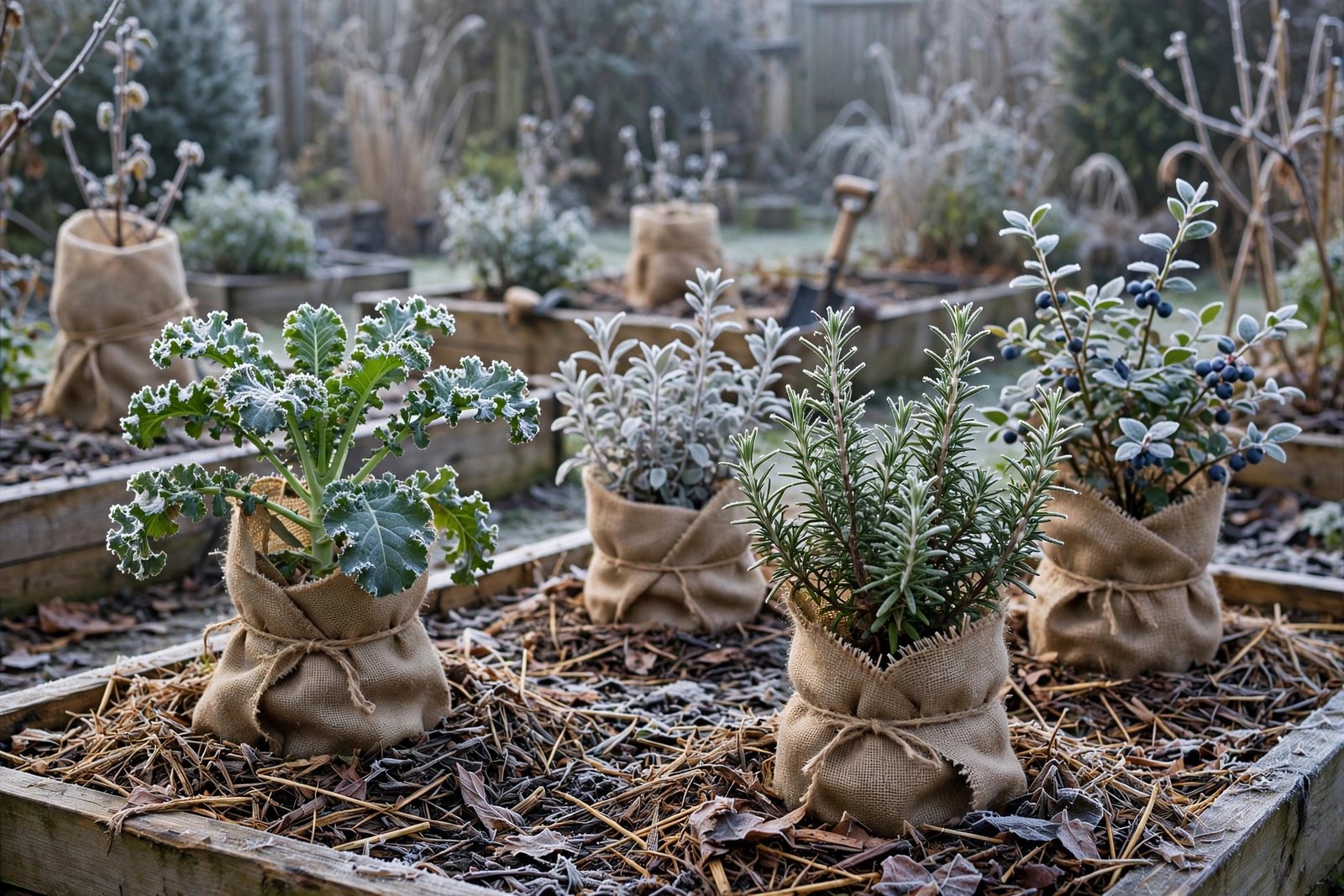
Every fall, gardeners face the same triage: which plants survive winter outside, which need shelter, and which are goners? Overwintering — shepherding tender plants through the cold months — sounds expert-level, but it’s mostly a checklist. Get the checklist right and your geraniums, citrus, tropicals, and tender perennials greet spring alive instead of becoming compost. Here’s the easy version.
Know Your Zones and Your Plants
Everything starts with USDA hardiness zones — find yours (the USDA map, updated 2023). A plant rated hardy to your zone (or colder) stays outside with basic mulching. A plant rated for warmer zones needs protection or indoor shelter. The categories: hardy perennials (sleep outside), tender perennials (survive with protection), tropicals and annuals (come inside or die).
The container rule: pots lose about two zones of hardiness — a plant hardy to zone 6 in the ground only survives zone 8 in a pot, because roots freeze harder above ground. When in doubt, protect potted plants one level more aggressively than in-ground ones. Check The Old Farmer’s Almanac for your area’s first-frost dates — timing is everything — and your local extension service for zone-specific winter protection guides.
Bringing Plants Indoors: The Transition
Timing: move tropicals inside when nights consistently drop below 50°F (10°C) — before the first frost, not after. Citrus, hibiscus, bougainvillea, and tender herbs follow this rule. De-bug first: inspect thoroughly, spray foliage with water, and consider a neem oil treatment — you don’t want to import aphids and spider mites into your home. Repot if rootbound, and prune lightly (heavy pruning waits for spring).
Indoor placement: brightest window available (south-facing), away from heating vents (hot dry air is the indoor killer) and cold drafts. Water way less: growth slows dramatically — water only when soil is dry an inch or two down; overwatering kills more overwintering plants than cold does. Expect some leaf drop in the first weeks — it’s transplant shock, not death. Humidity: group plants together, use pebble trays, or run a humidifier; winter indoor air (often under 30% humidity) desiccates tropicals. No fertilizer until spring growth resumes.
Mulching and Protecting Plants That Stay Outside
For hardy-but-marginal plants staying out: mulch after the ground freezes (not before — early mulch invites rodents to nest). Apply 4–6 inches of straw, shredded leaves, or wood chips around (not against) crowns. Roses: mound soil or compost 8–10 inches around the base; wrap tender climbers in burlap. New plantings: anything planted this year gets extra mulch regardless of rating — roots aren’t established.
Containers outside: cluster pots together against a sheltered wall (south-facing), wrap pots in bubble wrap or burlap (insulate the pot, roots are the vulnerable part), mulch the tops, and elevate slightly off the ground for drainage. In brutal zones, sink pots into the ground or move to an unheated garage — dormant plants need cold, just not extreme cold plus wind. Water containers monthly through winter thaws; desiccation kills as surely as freezing. These are the garden equivalents of winterizing your home — preparation beats rescue.
The Dormancy Option: Garages and Basements
Many tender plants (geraniums, dahlias, cannas, figs) can go dormant — no light needed, just cool (35–50°F) and dark-ish. Geraniums: shake off soil, hang bare-root upside down in a cool basement, spritz roots monthly — they’ll look dead and resurrect in spring. Dahlia/canna tubers: dig after first frost blackens foliage, dry, pack in peat or vermiculite, store at 40–50°F, check monthly for rot. Figs: defoliate and store dormant in a garage.
Dormancy is the lowest-effort overwintering there is — no lights, no watering schedules, just a cool corner and patience. The main failure mode is rot from too-warm, too-damp storage; when in doubt, cooler and drier. Label everything — dormant tubers all look alike in February, and mystery tubers get planted in the wrong spots.
Spring Revival: Waking Them Up Right
Timing: reverse the fall process — move plants out after last frost, but harden off first: 7–10 days of gradually increasing outdoor exposure (shade first, then morning sun, then full days). Skipping hardening sunburns tender indoor-grown leaves. Prune: cut back leggy winter growth by a third to encourage bushy spring growth. Repot: fresh soil for plants that spent winter indoors — they’ve exhausted their pots. Resume feeding: half-strength fertilizer as new growth appears, full strength once actively growing.
Don’t rush: a late frost kills more overwintered plants than the entire winter did. Watch the 10-day forecast, keep frost cloth handy, and remember that patience in May beats replanting in June. For lawns waking up too, see maintaining a lawn without a sprinkler system — spring is lawn season as much as garden season.
Overwintering Cheat Sheet by Plant
Geraniums (pelargoniums): dormant bare-root in a cool basement, or as houseplants in bright windows — both work; dormant is less work. Dahlias/cannas/gladiolus: dig tubers after frost, store in peat at 40–50°F. Citrus: indoors before nights hit 50°F, brightest window, water sparingly, expect some leaf drop. Rosemary: borderline hardy — in zone 7+, mulch heavily outside; colder, bring inside (it hates indoor heat, so keep it cool and bright).
Figs: in-ground in warm zones with mulch; in cold zones, container figs go dormant in garages. Succulents: most want bright, cool, dry winters — water monthly at most; cold-hardy sedums stay outside. Banana plants: cut back, mulch the stump heavily in zone 8+; elsewhere, dig and store dormant. Tender bulbs (elephant ears, caladiums): dig, dry, store like dahlias. When in doubt about a specific plant, the rule is simple: if it’s tropical and you love it, bring it in — the garage-dormant experiment costs nothing to try.
Conclusion
Overwintering plants easily means knowing your zone, bringing tropicals in before frost (de-bugged, in bright spots, watered sparingly), mulching outdoor plants after freeze-up, protecting container roots, using dormancy for the willing, and hardening off carefully in spring. It’s a checklist, not a talent — run it every fall and your garden becomes perennial in the truest sense.
Frequently Asked Questions
When should I bring plants indoors for winter?
When nights consistently drop below 50°F (10°C) — before the first frost. Tropicals, citrus, and hibiscus follow this rule; check your first-frost date and work backward two weeks.
Can I overwinter plants in my garage?
Yes, for dormant storage — many tender plants (geraniums, dahlias, figs) overwinter fine in a cool (35–50°F) dark garage with no light and minimal water. Actively growing tropicals need light and belong in bright windows instead.
Why do my overwintered plants lose leaves indoors?
Usually transplant shock and lower light — normal in the first weeks. Reduce watering, ensure bright light, and wait; new growth adapted to indoor conditions follows. Only worry if stems go mushy (rot).
How do I protect potted plants outside in winter?
Cluster pots against a sheltered wall, wrap pots (not plants) in insulation, mulch tops heavily, and water during thaws. Remember pots lose ~2 hardiness zones versus in-ground planting.
Can I leave potted plants outside all winter?
Only if they’re hardy two zones colder than yours (pots lose ~2 zones). Otherwise cluster, insulate pots, mulch heavily, or move to an unheated garage. Tender plants must come inside or go dormant.
Should I fertilize plants I’m overwintering indoors?
No — hold all fertilizer until spring. Overwintering plants grow slowly or not at all, and feeding dormant plants causes weak growth and salt buildup. Resume half-strength feeding when new spring growth appears.