Paul McCartney: Net Worth, Age, Family and Career Explained
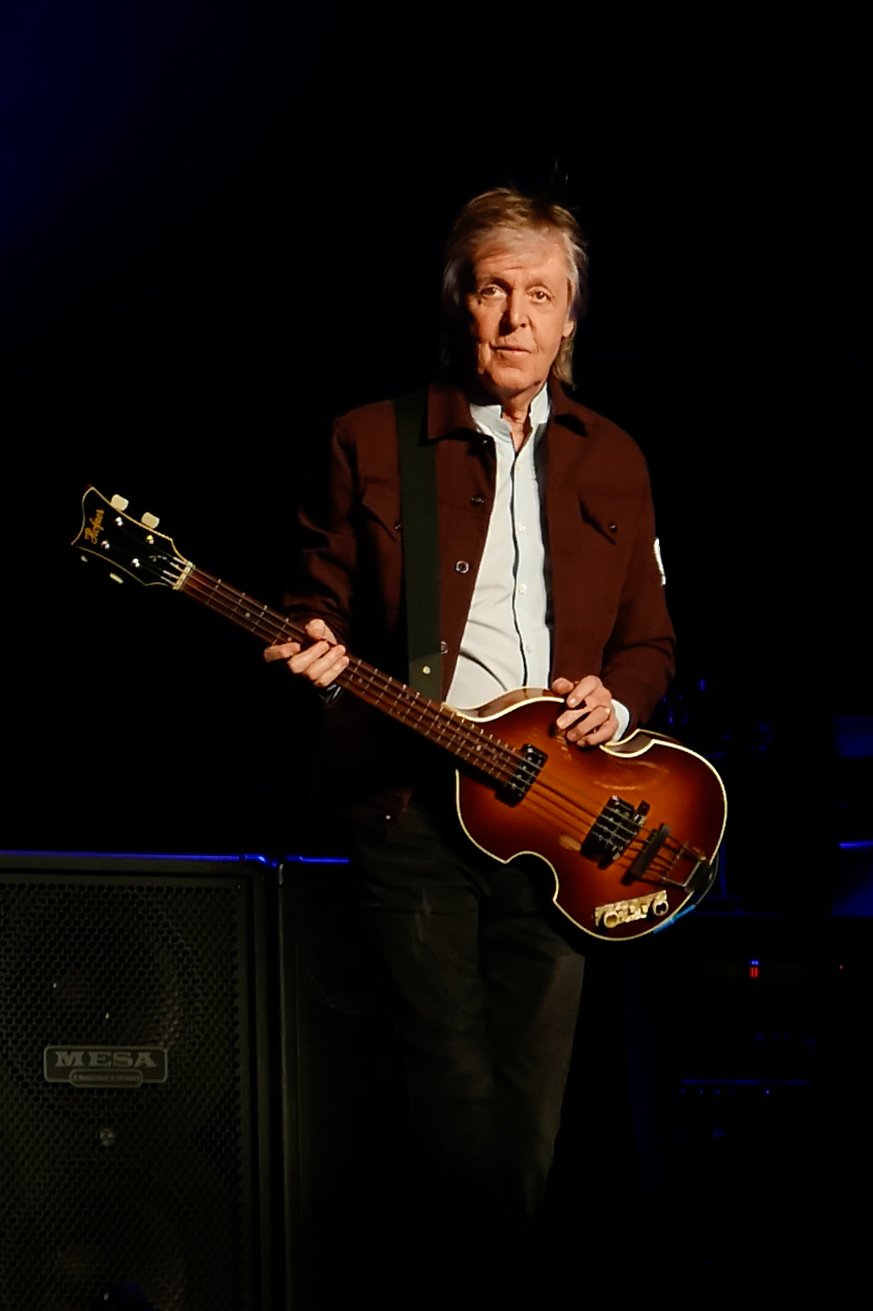
Paul McCartney is 84 years old, married to Nancy Shevell since 2011, and the father of five children. The Sunday Times Rich List put the couple’s combined fortune at £1.025 billion in its 2025 list, after naming them at £1 billion in 2024 — the first time a musician had reached that mark on the list — while Forbes, counting McCartney alone, estimated his fortune at $1.4 billion in November 2026.
Six decades after the Beatles’ first single, he is still touring, still releasing records and still, by a distance, the most commercially successful songwriter in popular music history. This profile covers the facts behind the biggest searches: his age, height, wife, children, parents, songs, albums, homes and cars.
Nancy Shevell, Five Children and a Marriage Since 2011
McCartney has been married three times. His first marriage, to Linda Eastman, began on 12 March 1969 and lasted until her death from breast cancer on 17 April 1998. It was famously stable by the standards of their world: the couple raised their family largely on their farm in Sussex, took the children on tour with Wings, and campaigned together on the causes they shared. His second marriage, to Heather Mills, began in June 2002 and ended in a divorce finalised in 2008. His third marriage, to Nancy Shevell, took place on 9 October 2011 in London, and it is the current marriage: Shevell is his wife, and the couple divide their time between London, Sussex and New York.
His five children are Heather, Linda’s daughter from her first marriage, whom McCartney adopted; Mary, born in 1969, a photographer; Stella, born in 1971, one of the most successful fashion designers of her generation; James, born in 1977, a musician; and Beatrice, born in 2003, his daughter with Heather Mills, who has been raised almost entirely out of the public eye. He is a grandfather many times over through his older children, and family gatherings at the Sussex farm remain the fixed point of his calendar between tours.
Dogs are a genuine part of that family record, not a decorative detail. His Old English Sheepdog Martha, who arrived in 1966, was so much a part of the household that he named the White Album song “Martha My Dear” for her, a fact he has confirmed himself. The Sussex lanes around the farm are walking country, and the routine of a daily walk with a dog is one he has kept for decades — the same habit that sits behind practical guides such as clear advice on how often you should walk your dog, where the consistent answer is that the walk matters as much to the routine of the house as to the dog.
On Instagram he posts as @paulmccartney, where tour photographs, archive Beatles material and studio updates reach an audience in the millions. His social media presence is run in the same organised way as his tours: regular, warm and carefully archived.
A Liverpool Childhood and a Family of Musicians
James Paul McCartney was born on 18 June 1942 at Walton Hospital in Liverpool. His father, James McCartney, worked as a cotton salesman and played trumpet and piano, leading a small jazz band in his younger years; music in the McCartney house was something you played, not just something you listened to. His mother, Mary Patricia McCartney, worked as a nurse and a midwife. He has a younger brother, Mike, who built his own career in music and photography, and a stepsister, Ruth, who joined the family through his father’s second marriage.
His mother died in October 1956, following an operation, when Paul was fourteen. He has said many times that the loss sat underneath his closeness with John Lennon, whose own mother died two years later, and it surfaces in his writing most famously in “Let It Be”, a song he has explained began with a dream of his mother in a period of strain. His father, who raised the two boys and kept the household organised and musical, died in 1976.
McCartney met Lennon on 6 July 1957 at a village fete in Woolton, where Lennon’s group the Quarrymen were playing. He joined the group, brought in his younger friend George Harrison the following year, and by 1960 the group had settled on the name the Beatles, with Stuart Sutcliffe and Pete Best completing the early line-up. Ringo Starr replaced Best in August 1962, weeks before the first single. The rest of this profile is, in large part, the consequence of that July afternoon.
A Billion Pounds, Counted by the Sunday Times and Forbes
The figures need their labels, because the three main sources do not measure the same thing. The Sunday Times Rich List put McCartney and his wife Nancy Shevell at £1 billion in 2024 and at £1.025 billion in 2025. That figure is a combined couple figure: the Rich List assesses them together, and Shevell’s own family business wealth forms part of it. It must never be quoted as McCartney’s solo fortune without that flag. Celebrity Net Worth puts him at $1.2 billion. Forbes, in November 2026, estimated his fortune at at least $1.4 billion, counting him alone, and placed him third among the world’s richest musicians. The disagreement between sources is printed here deliberately: $1.2 billion, £1.025 billion combined, and $1.4 billion solo are three different measurements, and honest reporting keeps them apart.
The structure underneath the numbers is consistent across all three sources. His company MPL Communications, founded at the turn of the 1970s, owns publishing rights to thousands of songs beyond his own, including works by Buddy Holly and many stage and popular standards; Forbes valued MPL at at least $250 million. His share of the Lennon–McCartney catalogue and his quarter share of the Beatles’ company Apple Corps continue to generate royalties at a scale no other songwriter of his era matches, and his tours gross at stadium level into his eighties.
His homes are long-held rather than frequently traded. His London house, on Cavendish Avenue in St John’s Wood, a short walk from the Abbey Road studios, has been his since 1965, when he bought it for £40,000. His main country base is his farm near Peasmarsh in East Sussex, assembled from the 1970s onwards and now a large, private estate with the studio where McCartney III was recorded. He bought High Park Farm on the Mull of Kintyre in Scotland in 1966, the landscape later celebrated in song, and he has held homes in New York and elsewhere in step with his touring and family life.
His cars follow the same pattern of early purchases kept and used rather than a rotating supercar fleet. The best documented is his Aston Martin story: he bought an Aston Martin DB5 in 1964, finished in Sierra blue and fitted with a record player, and followed it with a DB6 that he kept for years and drove extensively. A Lamborghini 400 GT from the same era is also well documented in accounts of his collection. Beyond those verified period cars, lists of his supposed modern garage vary widely between sources and carry no confirmation, so they are not reproduced here. His weight, for the same reason, is not printed: figures of around 68 to 72 kilograms circulate on biography sites with no sourcing, and no reliable published figure exists.
A Billionaire Musician, the First on the Rich List, in Figures
| At a Glance | Details |
|---|---|
| Born | 18 June 1942, Liverpool |
| Age | 84 |
| Height | 5 ft 11 in (180 cm) |
| Weight | No reliable published figure exists |
| Wife | Nancy Shevell (married 9 October 2011) |
| Children | Five: Heather, Mary, Stella, James and Beatrice |
| Parents | James McCartney and Mary Patricia McCartney |
| Net Worth | £1.025 billion combined with Nancy Shevell (Sunday Times Rich List, 2025); $1.4 billion for McCartney alone (Forbes, November 2026); $1.2 billion (Celebrity Net Worth) |
| @paulmccartney |
The Beatles, Wings and a Solo Catalogue Without End
1962–1966: Beatlemania and the first songwriting empire
“Love Me Do” was released in October 1962, and within eighteen months the Beatles were the biggest act in the world on both sides of the Atlantic. The albums came at a pace no modern act attempts: Please Please Me and With the Beatles in 1963, A Hard Day’s Night and Beatles for Sale in 1964, Help! and Rubber Soul in 1965, and Revolver in 1966. McCartney’s songs from this period alone would fill a career: “Yesterday”, written in 1965 and now among the most covered songs ever recorded, “Eleanor Rigby”, “Michelle”, “Drive My Car” and “Paperback Writer”. The Lennon–McCartney credit, applied jointly to songs either man wrote, became the most valuable songwriting brand in music.
1967–1970: Sgt. Pepper, the White Album and the end
Sgt. Pepper’s Lonely Hearts Club Band in 1967, a project McCartney drove, reset what an album could be. The double The Beatles, known as the White Album, followed in 1968, carrying his “Blackbird”, “Helter Skelter” and “Back in the U.S.S.R.” on the same record. Abbey Road in 1969 gave him the closing medley and “Here Comes the Sun” was Harrison’s, but the album’s commercial engine was shared. Let It Be, recorded before Abbey Road but released in May 1970, was the last of it. McCartney announced his departure in April 1970, and the partnership that had organised a decade of pop music was over. He was 27.
1970–1979: Wings and the second career
His solo debut, McCartney, was released in April 1970, recorded largely at home. Ram followed in 1971, credited with his wife Linda. He then did the thing critics least expected: he formed another band. Wings, built around Paul and Linda McCartney and guitarist Denny Laine, toured small halls first and arenas later, and by the middle of the decade they were one of the biggest live acts in the world. Band on the Run in 1973, recorded in Lagos, is the solo-era record most often placed beside the Beatles’ best, and it produced “Jet” and the title track. Wings’ hits across the decade included “My Love”, “Live and Let Die”, “Listen to What the Man Said”, “Silly Love Songs” and “Mull of Kintyre”, the last of those a number one that became one of the best-selling singles of all time in his home market. In 1980, McCartney II, another home-built record, closed the Wings era.
1980–2000: Solo years, duets and the long middle
The 1980s brought Tug of War in 1982, with “Ebony and Ivory”, his duet with Stevie Wonder, and two collaborations with Michael Jackson, “The Girl Is Mine” and “Say Say Say”. Flowers in the Dirt in 1989, written partly with Elvis Costello, powered his return to full-scale touring. The 1990s mixed studio records — Off the Ground in 1993 and the warmly received Flaming Pie in 1997 — with the Beatles’ Anthology project, which reunited the surviving members to complete two Lennon demos as new Beatles records. His standing by the end of the century was unusual: a heritage artist by catalogue, a working artist by habit.
2001–2026: Chaos, Egypt Station, McCartney III and still touring
Driving Rain arrived in 2001, Chaos and Creation in the Backyard in 2005 to some of the best reviews of his solo career, and Memory Almost Full in 2007. Egypt Station in 2018 became his first number one album in more than 36 years. In December 2020 he released McCartney III, written and recorded alone during lockdown at his Sussex studio, completing a trilogy of self-made records begun fifty years earlier. His Got Back tour ran across 2022 to 2024, closing with stadium and arena dates in Manchester and London in December 2024. In November 2023, “Now and Then”, completed from a Lennon demo with Harrison’s recorded guitar and new parts from McCartney and Starr, was released as the Beatles’ final single and topped the chart. At 84, he remains a working headline act, which no one else from his generation can claim on the same scale.
The Musician Who Reached a Billion First
At 84, Paul McCartney’s position is without parallel: the co-author of the most valuable songbook in popular music, a billionaire on every serious measurement, a husband, father of five and grandfather, and still a touring musician closing stadium shows. The numbers in this profile will be revised by the Rich List and Forbes in their own time. The catalogue will not need revising at all.