Nobody shops for emergency gear on a calm afternoon — they wish they had, at midnight, on a dark shoulder, with a dead phone. That gap between calm and crisis is exactly what a trunk kit is meant to close. The gear itself is not exotic or expensive in spirit. What matters is that it is present, working, and reachable when a breakdown, a storm, or a long wait turns an ordinary drive into a problem that has to be solved with whatever happens to be in the car.
A good kit is built in layers rather than bought as a single lump. One layer gets the car moving again. Another makes the car visible and keeps help within reach. Further layers cover the season, basic medical needs, food and warmth, and the habits that keep everything ready. Each layer below stands on its own, so a household can build the kit in stages, starting with the failures that happen most often and adding depth over time without turning the project into a chore.
Start with the breakdown basics
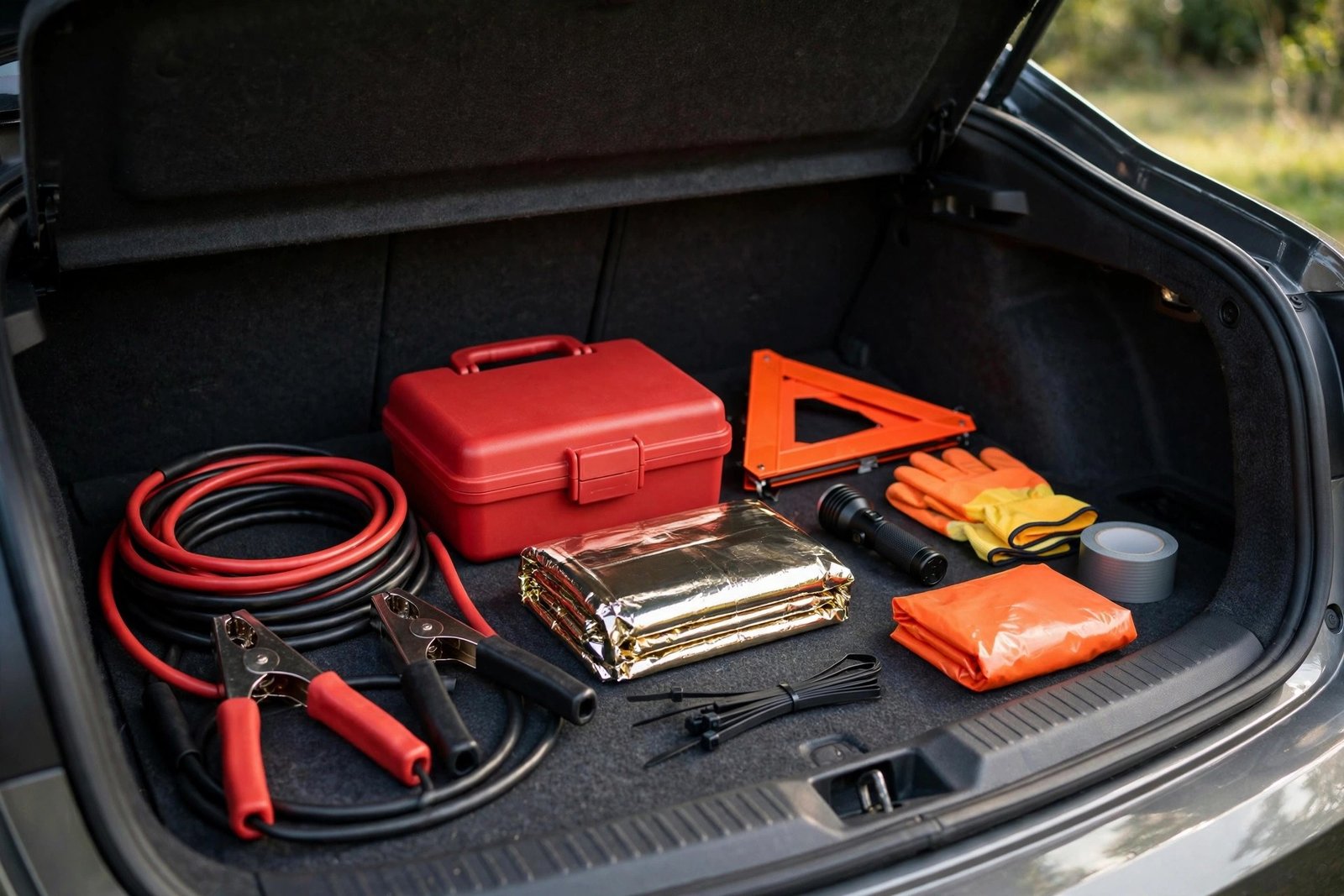
The layer that earns its space most often deals with a car that will not start or will not roll. Jumper cables remain a sound choice, but a portable jump starter is better for most drivers because it needs no second car and no willing stranger in a parking lot. A dead battery rarely announces itself in a convenient place, and the ability to restart the car alone, in the rain, without flagging anyone down, makes the jump starter the single most-used item in a well-built kit. Keep it charged, and treat it as the heart of the breakdown layer.
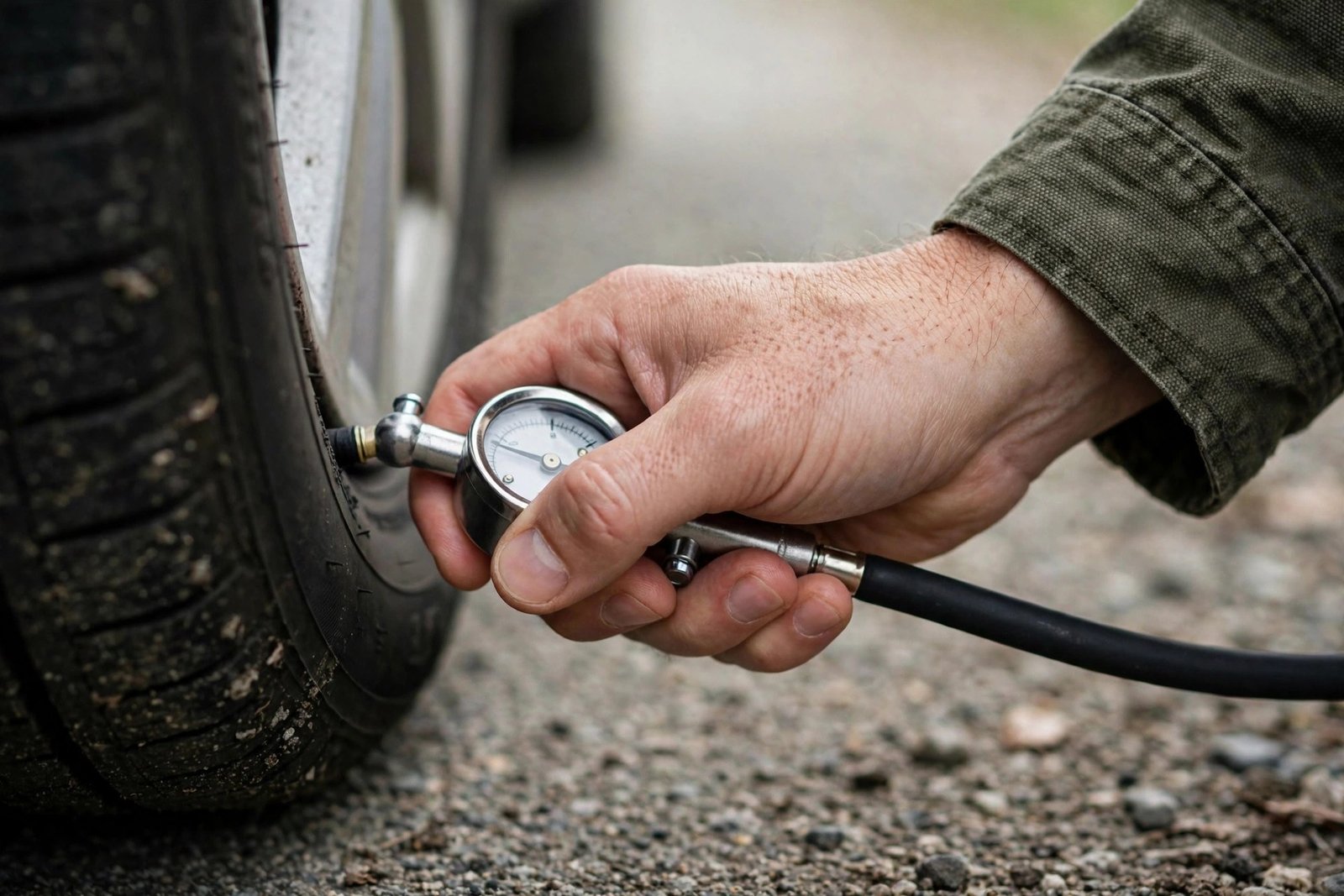
A flat or soft tire is the other everyday failure. A small inflator or a can of sealant will not fix serious damage, but either one can turn a slow leak into a short drive to safety instead of a long wait on a shoulder. Alongside those, pack basic tools, duct tape, and zip ties. Those three form the improvisation trio of roadside repair. Tape seals, patches, and holds. Zip ties secure loose trim, hoses, and covers. Simple tools handle the clamps and fasteners that tape cannot. If cables are chosen instead of a jump starter, choose thick ones. The lower the gauge number, the thicker the cable, and thin bargain cables often fail at the exact moment they are needed most.
Being seen, and calling for help
A stopped car is a hazard before it is anything else, so the next layer is about being seen early and clearly. Reflective warning triangles or reusable flares with bright lights warn approaching traffic far sooner than hazard lights alone, and reusable lights avoid the burn risk and single use of old-fashioned road flares. Place them with care, giving drivers behind enough distance to react, and step well clear of traffic while doing so. A high-visibility vest belongs with them. A driver crouched beside a wheel or walking to a safer spot at night should be unmistakable to everyone approaching.
Light and contact complete the layer. A flashlight earns its place on every dark job, from checking a tire to reading a fuse diagram, and a hand-crank light has the quiet advantage that it never dies from flat batteries. A charged power bank, checked regularly rather than forgotten, protects the most important lifeline of all. A dead phone is a dead lifeline. Without it there is no call for help, no location to share, no map, and no way to reach family. The power bank is small, light, and easy to overlook, which is exactly why it needs a place on the regular check list rather than blind trust.
Swap with the seasons
The year-round core stays in the car through every season, but the dangers around a breakdown change with the weather, and the kit should change with them. Winter adds a compact shovel for digging out around the wheels, plus sand or cat litter scattered for grip when tires spin on snow or ice. Warmth needs to be real in winter. A thin foil blanket helps, but genuine insulation matters more in a long cold wait, so add warmers, a hat, and gloves that can actually be worn while working or walking. Cold turns a delay into a health risk faster than most drivers expect.
Summer brings the opposite problem. Extra water becomes essential rather than nice to have, along with sunscreen for anyone who must wait outside the car and a sunshade to keep the cabin bearable while parked. Heat exhaustion can build quietly, so the warning signs deserve plain attention. Dizziness, nausea, and a rapid pulse mean the body is struggling, and shade, rest, and steady sips of water should come before any attempt to walk for help. In most cases the safest choice is to stay with the vehicle, since the car provides shelter and is far easier for help to find than a lone walker on a hot road. Make the seasonal swap when the clocks change, so the habit ties to a date nobody has to remember specially. Households planning hot-weather drives will also benefit from how to prepare your car for summer heat as a companion to the kit itself.
The medical layer
A real first-aid kit looks different from the decorative kind sold as an afterthought. The useful version holds pressure bandages for serious bleeding, antiseptic for cleaning wounds, burn gel, tweezers, and tape, along with an emergency blanket that serves warmth as well as shock care. Small cuts matter less than the rare injury that needs pressure and calm handling until help arrives, and the contents should reflect that order of importance. Anyone unsure about the standard contents can check what belongs in a first aid kit and compare it honestly against the kit already in the trunk.
Personal medication belongs in the same layer. A driver or passenger who relies on daily medicine should keep a sensible backup supply in the car kit, stored with care and replaced before expiry, because a breakdown far from a pharmacy turns a missed dose into a second emergency. Ready.gov, in its car-kit guidance, makes the same point alongside the standard supplies, and that guidance is worth following by name because it treats the car kit as part of household readiness rather than as a motoring accessory. The medical layer is rarely used. When it is needed, nothing else in the trunk can stand in for it.
Food, water, and staying warm
Some breakdowns are solved in minutes. Others stretch into hours, and that is where simple comfort supplies stop being extras. Keep water in the car and rotate it so the supply stays fresh rather than ancient and forgotten. Add non-perishable snacks that tolerate heat, cold, and long storage without complaint. A warm blanket covers waiting passengers, an injured person who needs to stay still, or a driver who must rest before continuing. Small supplies, chosen well, change the character of a long wait from miserable to manageable.
The rest of the layer is practical rather than edible. Work gloves protect hands during wheel changes and rough roadside jobs. A poncho keeps a driver workable in rain instead of soaked and cold. Small cash bills deserve a place too, because card readers fail, signals drop, and a little cash can pay for fuel, a phone charge, or help from a passing business when electronic payment cannot. Finally, keep a documents card with insurance details, the roadside-assistance number, and an emergency contact written clearly. In a stressful moment, or when someone else is driving the car, that card saves fumbling through a phone that may already be dead.
Buy it built, or build it yourself
Bought kits are a fine starting point, especially in the middle of the range where the bag is sturdy and the basics are genuinely included. The mistake is trusting the label without checking the contents. Audit any bought kit on arrival. Dead flashlight batteries and token first aid, little more than a handful of small adhesive bandages, are the classic weak spots, along with flimsy cables that look reassuring and perform poorly. Supplement whatever falls short right away rather than filing the weakness away as a job for later. A kit with known gaps, left unfixed, offers confidence without substance.
Building a kit from scratch, layer by layer, in a sturdy duffel usually beats most bought options on quality, because every item is chosen deliberately and weak fillers never make the cut. The duffel keeps the gear together, protects it from trunk clutter, and can be lifted out in one movement. One placement rule deserves special emphasis for drivers in flood country. A window breaker and seatbelt cutter belong within the reach of the driver, in the cabin, not in the trunk. In rising water or after a crash that jams the doors, trunk gear might as well be in another county. Placement is part of preparation, not an afterthought.
The twice-yearly check that keeps it real
A kit decays quietly. Batteries drain, water ages, snacks pass their dates, and cables corrode at the clamps. Twice a year, tied to the clock changes that already prompt the seasonal swap, check the whole kit with fresh eyes. Confirm charges on the jump starter and power bank, test flashlight batteries, taste nothing but check dates on water and food, review expiry dates on medical supplies and personal medication, and inspect cable condition for fraying or rust. Anything tired gets replaced during that same check, not added to a mental list that fades by the following week.
Storage and knowledge finish the job. Keep the kit reachable rather than buried under luggage and shopping, because a perfect kit trapped beneath a packed trunk fails at the moment of need. Make sure every regular driver knows the kit exists and roughly what it holds. Roadside assistance still matters and complements the kit rather than replacing it, since towing and major repairs lie beyond any bag of gear. The kit covers the first stretch, the wait, and the small fixes. Viewed that way, a trunk kit is simply the wider logic of a survival kit scaled to the car, and the drivers who benefit from it are usually the ones who checked it long before the night they needed it.