A whole Bitcoin is out of reach for most people, and it was never meant to be the unit anyone had to buy. The short answer is that you do not need a whole coin, or anything near one. Bitcoin divides into one hundred million smaller units, so any ordinary amount of money buys a real, spendable slice of the network rather than a token gesture towards it. A small purchase is not a lesser kind of Bitcoin, a beginner’s substitute, or a share in someone else’s coin. It is the same asset, held in your own wallet, movable on the same network, and counted in the same way as the largest holding in the world. Buying small is a designed feature of the system, built in from the start, and it is how most people who hold any Bitcoin at all actually begin. The sensible cautions are about costs and habits rather than size, which is why the same thinking sits behind quick tips for buying crypto on a budget as well as honest questions about what a modest amount can really do.
That matters because the headline price of one coin puts people off in two opposite ways. Some assume the moment has passed and small money is pointless. Others go hunting for cheap-looking coins priced in pennies, hoping a low unit price means room to grow, when the price of a single unit says nothing by itself about value. Both mistakes come from staring at the whole coin. Step back from it, and the picture clears: you are buying a portion of a fixed-supply asset, and the portion is sized by your budget, not by the coin. The person who buys a small slice and the person who buys a whole coin are doing the same thing at different scales, in the same market, on the same day. One of them simply started with the money that was spare, which is the only money that should ever be involved.
The unit system: one coin, a hundred million pieces
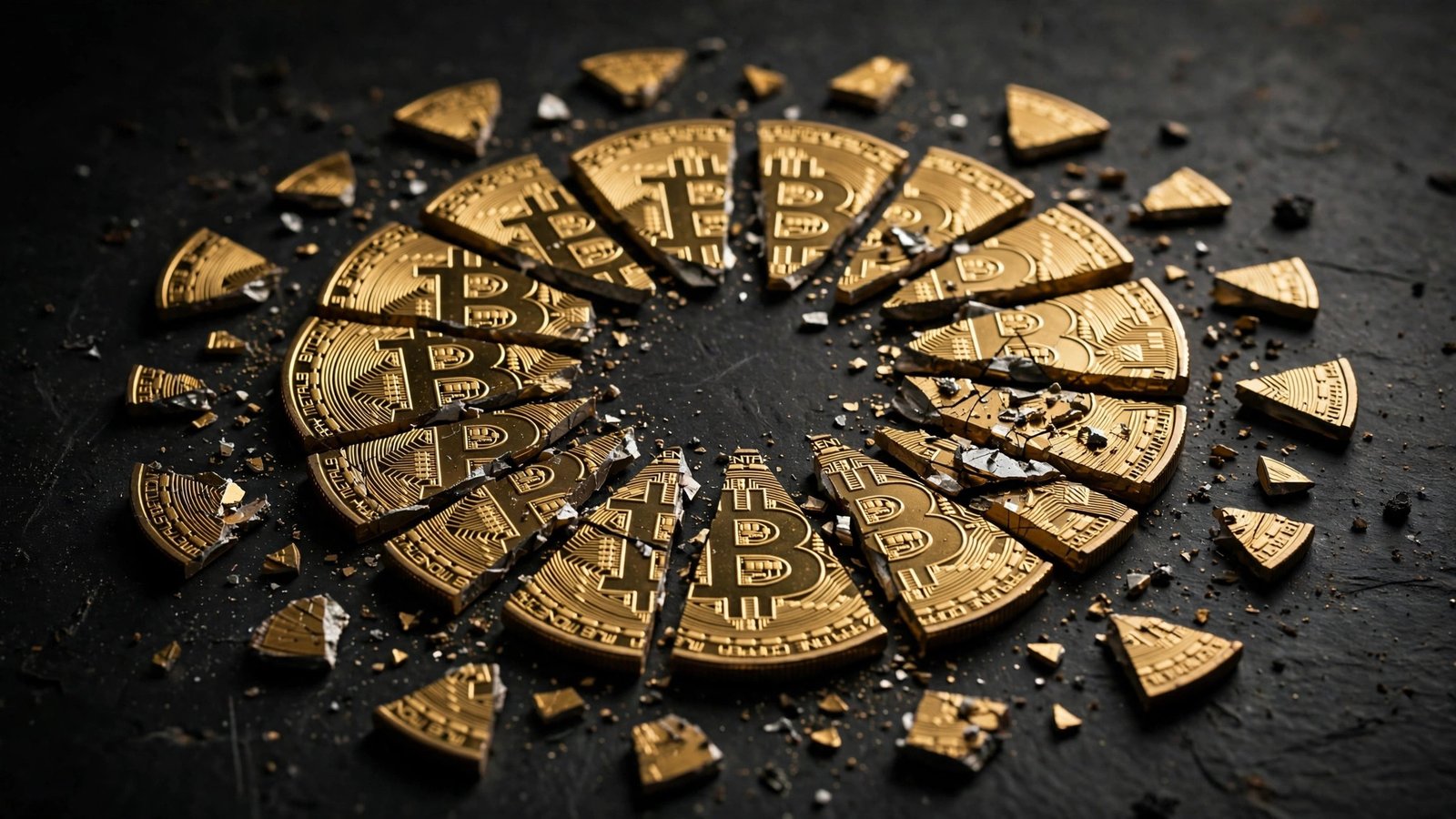
The smallest unit of Bitcoin is called a satoshi, named after the creator of Bitcoin, Satoshi Nakamoto. One coin holds one hundred million satoshis, which means the system can slice ownership far more finely than ordinary money ever needs. Pennies stop where they stop; satoshis keep going, so payments and purchases of almost any size can be expressed exactly. When you buy a small amount, the wallet simply records a large number of these small units in your favour. There is no separate small-holder tier and no minimum slice below which ownership becomes symbolic. Your satoshis are identical in kind to everyone else’s, and they combine and divide again freely whenever the holding moves. That divisibility is also what makes small payments practical in principle: a coffee, a tip, a tiny remittance to a relative, or a payment for a small piece of work can each be expressed in satoshis without rounding the value away. The unit system was designed for a world where the coin might become valuable, and where ordinary life still needed change smaller than the smallest coin in a pocket.
Wallets are learning to show this in friendlier ways. Many now let you switch the display from whole coins into satoshi view, so a modest balance appears as a satisfying count of units instead of a long, discouraging row of zeros after a decimal point. That small change of presentation does real work, because the decimal view is where unit bias takes hold. Unit bias is the psychological pull of whole things: people prefer owning a complete unit of something, and they judge cheapness by the price of one unit rather than by the size of the whole. It is why unknown coins priced at a fraction of a penny can feel like bargains while a fraction of Bitcoin feels like crumbs, even when the money spent and the share of each network bought are far more favourable on the Bitcoin side. A supply can be enormous, the project behind it thin, and the low unit price still glow with false promise. Judging by the share of the whole, and by the credibility of the network behind it, is the steadier habit, and satoshi view quietly trains it every time you open the wallet.
Where small buys are treated fairly
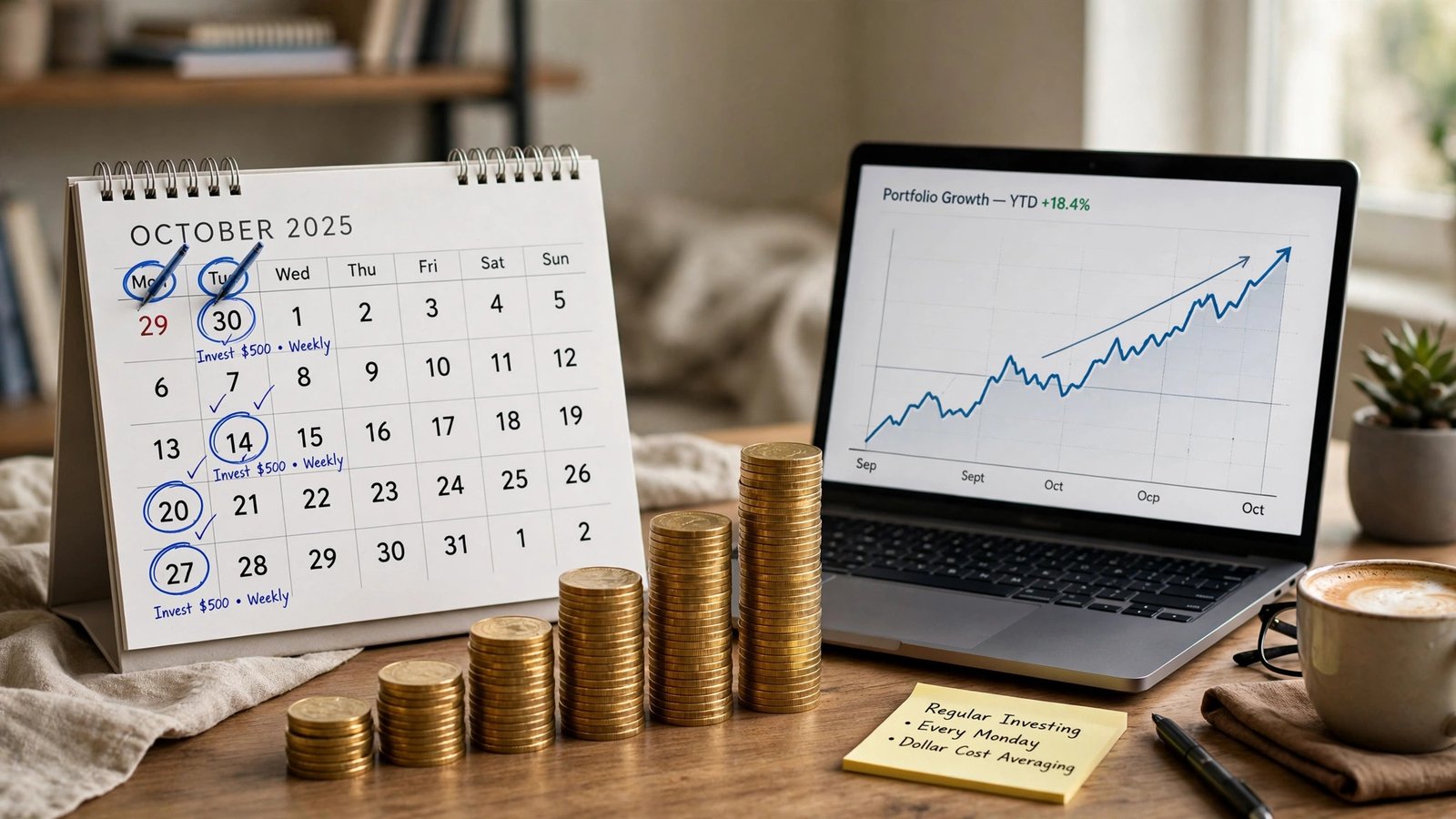
Small amounts are treated fairly in more places than they used to be. The major exchanges all allow modest purchases, and some familiar money apps are framed around small buys from the ground up, with Cash App and Strike among the names most people meet first. The deciding question is rarely whether a platform will take a small order, but what the order costs. Minimum purchase levels exist, and fees decide whether a modest buy is sensible or wasteful. Where a fee carries a fixed minimum, the tiniest buys lose a painful share of themselves to the charge, while the same money gathered into slightly larger purchases passes through far more cheaply. That is why weekly moderate buys often beat daily tiny ones for a saver on a budget: the total invested is unchanged, yet far less of it is spent on the act of buying. Read the fee shape before the first purchase, in plain language, and size the habit around it.
Moving small amounts has its own cheap rail. Built to carry little payments quickly and at very low cost, the Lightning Network and cheap small bitcoin payments sit alongside the main chain, where every transaction competes for limited space. For a small holder, that matters when the time comes to spend, to send money to another person, or to move a balance into a wallet of your own without the transfer eating a visible bite of it. A cost that a large holder would never notice can be a real share of a small balance, so the choice of rail is part of treating a small buy fairly rather than an afterthought left to the day you happen to move it. The one route to treat with suspicion is the Bitcoin ATM on a high street or in a shop corner. It is genuinely convenient, and that convenience is what you pay for, usually dearly, in a worse price and heavier charges than any ordinary app would ask. As a demonstration for a curious friend it has its place; as a regular way to build a holding, it is the expensive option to avoid.
Does a small amount actually matter?
Honestly framed, a small amount does the same work as a large one, only less of it. Whatever you hold grows or shrinks by the same share as any other holding, because the market does not grade owners by size. There is no bonus for wholeness and no penalty for fractions. That plain fact cuts both ways: a modest holding will not quietly become a fortune through any special property of smallness, and it will not be left behind by rises that only whole coins enjoy. What a small amount genuinely offers is different, and more useful than fantasy. It offers learning with real stakes, because a person who owns a little reads, checks, and stores with a care that a person merely watching never quite finds. It offers the start of the regular saving habit, where a modest scheduled buy builds a position and a routine at the same time. And it offers optionality: a foothold in an asset you have decided to understand, sized so that being wrong is survivable. All of that rests on the design described in Bitcoin’s fixed supply and design, a capped total that can never be expanded, divided into pieces small enough for anyone to hold a share of it.
The counterweight deserves equal honesty. Fees can quietly tax a small holding harder than a large one, as the fixed charges take their bite from a smaller meal. Attention is a cost too: a holding that is checked hourly and worried over daily is being paid for in peace of mind, whatever its size. And the oldest rule stands above both. Money that is needed soon, for rent, for a repair, for anything with a date on it, does not belong in an asset that can fall sharply and stay down longer than the bill allows. A small amount matters when it is spare, patient, and cheaply bought. When it is borrowed from next month’s necessities, even a tiny sum is too large. There is also a calmer way to judge whether the amount matters: ask what it has taught you and what habit it has built, rather than what it is worth this week. A small holding that turned a curious reader into a careful owner, with records kept and storage understood, has already done meaningful work. A small holding bought in a rush and checked in a panic has mostly purchased anxiety, and the size of the sum has very little to do with which of those two outcomes you get.
The starter move is therefore modest on purpose. Make one modest scheduled buy, in an amount you have already decided you can leave alone, through a service whose fees you have actually read. Move the result into a wallet you control, note the purchase in plain records, and let the routine repeat while you learn. Resist the urge to enlarge the buy the first time the price moves in your favour, and resist the opposite urge when it moves against you. The second and third purchases, made calmly at the same size, teach more than any single dramatic one, because they turn a decision into a habit and a habit into a position. A fraction, handled that way, is not a consolation prize for missing the whole coin. It is the system working exactly as it was designed to work.