
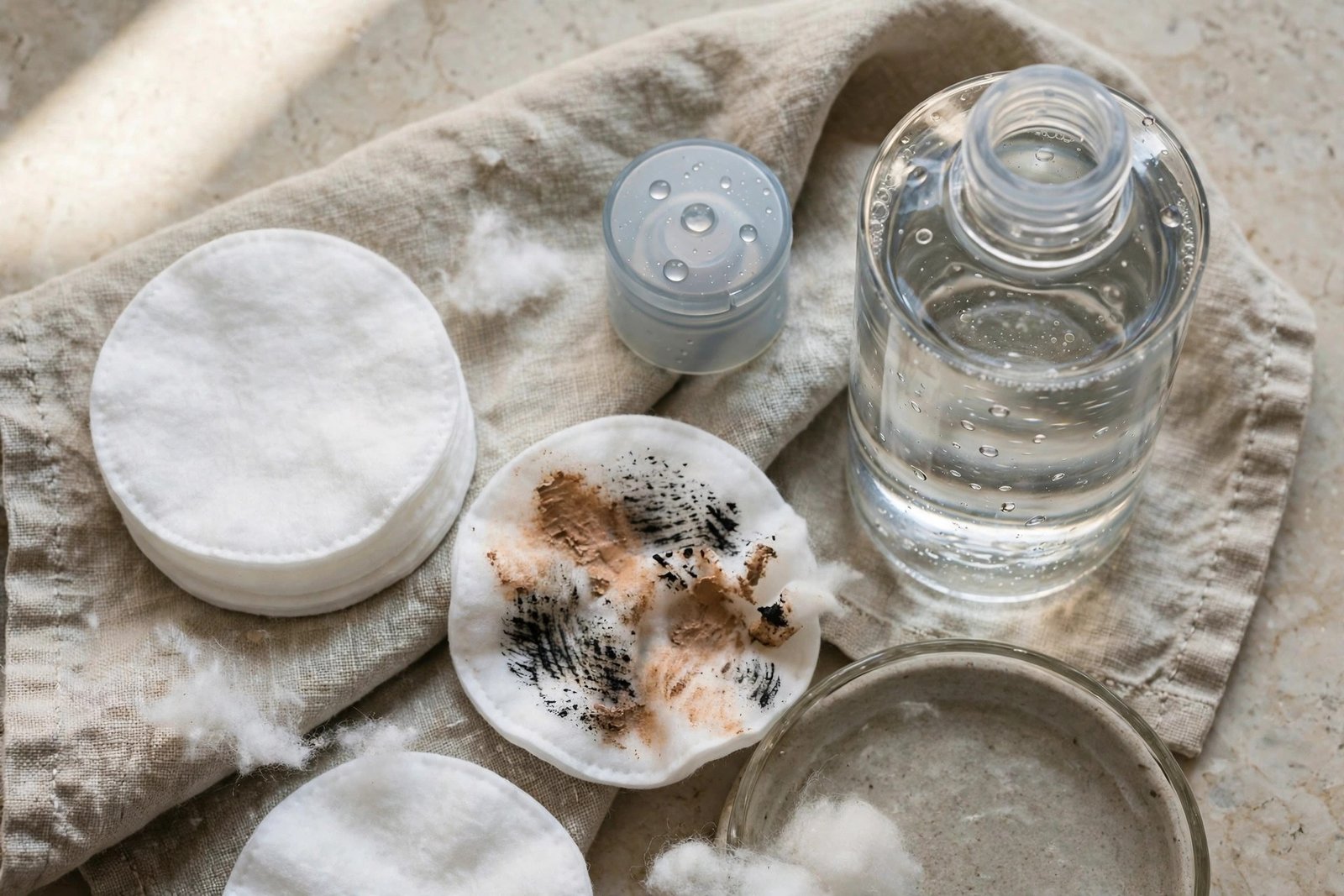
Waterproof makeup is a double-edged sword: it stays put through sweat, tears, and humidity, but removing it can feel like trying to wash off superglue. Scrubbing aggressively damages the delicate skin around your eyes, causes lash breakage, and leaves you with irritated, red skin. There is a better way — the right remover and technique dissolve waterproof formulas effortlessly without the trauma.
This guide explains the fastest, gentlest way to remove waterproof makeup, the products that work, and how to protect your skin and lashes in the process.
Why Waterproof Makeup Is Hard to Remove
Waterproof formulas use water-resistant polymers, silicones, and waxes that repel water — which is why they stay on, and why water alone does not remove them. Regular cleansers (which are water-based) cannot dissolve these ingredients effectively. You need an oil-based or dual-phase remover that can break down the water-resistant film.
The key principle is “like dissolves like”: oil dissolves oil-based makeup. This is why oil cleansers and balms work so well — they melt through waterproof mascara, long-wear foundation, and waterproof eyeliner without harsh rubbing. Understanding this chemistry saves you from the scrub-and-irritate cycle. For general makeup removal wisdom, see looking polished with minimal makeup effort — starting with clean, healthy skin makes everything easier.
The Best Removers
Cleansing Oils and Balms
These are the gold standard for waterproof makeup. Apply to dry skin, massage gently for 60 seconds (the massage time matters — it gives the oil time to dissolve the makeup), then emulsify with water and rinse. DHC Deep Cleansing Oil, Clinique Take the Day Off Balm, and Banila Co Clean It Zero are excellent and affordable. They remove everything — waterproof mascara, long-wear foundation, sunscreen — in one step, without stripping skin.
Dual-Phase Eye Makeup Removers
For eyes specifically, dual-phase removers (oil + water layers you shake to mix) are ideal. They are formulated for the delicate eye area and dissolve waterproof mascara efficiently. Saturate a cotton pad, press against closed eyes for 20-30 seconds (do not rub immediately — let the product work), then gently wipe downward. Lancôme Bi-Facil and L’Oreal Dermo-Expertise are classics; drugstore dual-phase removers work nearly as well. Cleveland Clinic’s dermatologist skin care tips cover gentle cleansing too.
Micellar Water (for Light Waterproof)
Micellar water works for light waterproof makeup but struggles with heavy-duty waterproof mascara. It is good for a first pass or for sensitive skin that does not tolerate oils. For true waterproof formulas, oil-based is more effective. If you use micellar water, choose one formulated for waterproof makeup and follow with a proper cleanse — micellar water alone is not sufficient cleansing. For skin health basics, foods for healthy skin support your skin’s resilience.
The Right Technique
Technique matters as much as product. For eyes: saturate a pad, press and hold (do not scrub), wait 30 seconds, then wipe gently downward and outward. Repeat with a fresh pad if needed — two gentle passes beat one aggressive scrub. For face: massage oil cleanser for a full 60 seconds, focusing on areas with heavy makeup. Rinse thoroughly, then follow with a water-based cleanser (the double cleanse method) to remove all residue.
Be especially gentle with lashes. Waterproof mascara makes lashes brittle; aggressive removal breaks them. If mascara is stubborn, apply remover, wait, and let it dissolve — patience preserves lashes. Never pull or tug at the eye area; the skin is the thinnest on your body and shows damage quickly. After removal, apply eye cream to nourish the area. The AAD’s cleansing guidelines emphasize that gentle, thorough removal prevents both irritation and premature aging.
Double Cleansing: The Complete Method
For heavy or waterproof makeup, single cleansing is insufficient. Double cleansing — oil cleanser followed by water-based cleanser — ensures complete removal without harsh scrubbing. Step 1: Apply oil cleanser or balm to dry skin, massage for 60 seconds, emulsify with water, rinse. This dissolves makeup, sunscreen, and sebum. Step 2: Apply a gentle water-based cleanser (gel or foam), massage for 30 seconds, rinse. This removes water-based debris (sweat, dirt) and any oil residue.
This method originated in Korean skincare and is now dermatologist-recommended worldwide. It is more effective and gentler than using a single harsh cleanser or makeup wipes (which are terrible — they smear makeup around and irritate skin). The key is using the right products: a good oil cleanser should emulsify completely and rinse clean, not leave a greasy film. If your skin feels tight after double cleansing, your water-based cleanser is too harsh — switch to a gentler formula.
Double cleanse every evening if you wear makeup or sunscreen (which you should). In the morning, a single gentle cleanse (or just water for dry skin) is sufficient. This routine keeps skin clean without stripping, which is the foundation for all other skincare to work effectively.
Ingredients to Look For (and Avoid)
Look for: plant oils (jojoba, sunflower, grapeseed — effective and gentle), ceramides (support skin barrier), and glycerin (hydrating). These remove makeup while nourishing skin. For eye removers, look for “ophthalmologist tested” and “safe for contact lens wearers.”
Avoid: high alcohol content (drying and irritating), fragrance (unnecessary irritant, especially near eyes), and harsh sulfates. If a remover stings or leaves your skin red, it is too harsh — switch to a gentler formula. The best remover is one that dissolves makeup completely without any stinging, tightness, or residue.
Effective removal is the foundation of healthy skin. No serum works on skin that is not properly cleansed. Invest in a good oil cleanser and learn double-cleansing. Two extra minutes at night pays dividends in clearer, healthier skin.
Remember that gentle, thorough removal is an investment in your skin’s long-term health. The two minutes you spend doing it right prevent the irritation, breakouts, and premature aging that come from harsh scrubbing or incomplete cleansing.
For more detailed guidance, see American Academy of Dermatology.
Frequently Asked Questions
Can I use coconut oil to remove waterproof makeup?
Yes, it works, but it is comedogenic (pore-clogging) for many people and can cause breakouts if not removed thoroughly. Formulated cleansing oils are better — they are designed to emulsify and rinse clean, while coconut oil requires more effort to remove completely.
Why does my skin feel tight after removing waterproof makeup?
You are either using a remover that is too harsh, scrubbing too aggressively, or not moisturizing afterward. Switch to an oil-based remover, be gentler, and always follow with moisturizer. Tightness means your skin barrier is compromised.
Is it bad to sleep in waterproof makeup?
Yes — worse than regular makeup. Waterproof formulas are occlusive and trap debris against skin, leading to breakouts, irritation, and eye infections. They also transfer to pillowcases and are even harder to remove the next day. Always remove before bed, no exceptions.
How do I remove waterproof makeup without a special remover?
In a pinch, any oil works — olive oil, jojoba oil, even petroleum jelly. Apply, wait, wipe gently. Then cleanse with your regular face wash. It is not ideal for daily use, but it works in an emergency. Do not use baby oil near eyes — it can cause irritation.
Can I use baby wipes to remove waterproof makeup?
Not effectively. Baby wipes are not formulated to dissolve waterproof makeup — they smear it around and require harsh rubbing. They are also not pH-balanced for facial skin. Use a proper oil-based remover; it is gentler and more effective. Baby wipes are for babies, not makeup removal.