
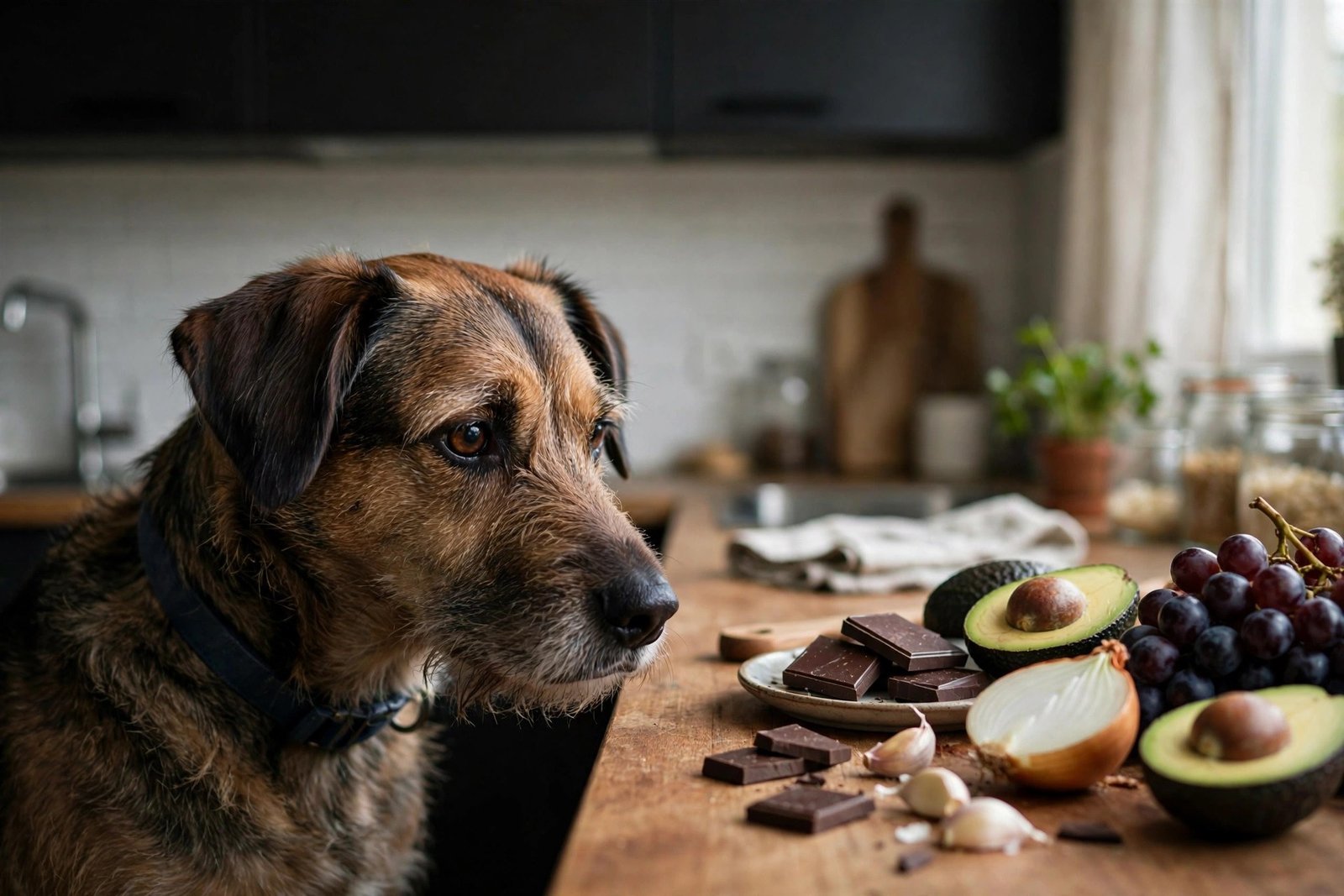
The most dangerous foods for your dog are probably in your kitchen right now, and one of them is hiding in the peanut butter jar. Dogs explore the world mouth first, and a dropped snack, an open handbag, or a low coffee table can put a risky item within reach in seconds. They are accidents involving ordinary shopping, ordinary baking, and ordinary leftovers that a household never thought of as dangerous at all.
The short answer: the list that matters
Most human food is harmless to dogs, and a long list of everyday items will cause nothing worse than a messy stomach upset, or nothing at all. A short list is different. That short list ranges from stomach upset at the mild end to fatal organ failure at the severe end, and it deserves to be learned properly rather than guessed at. Xylitol, chocolate, grapes and raisins, and macadamia nuts sit at the top. Onions and their relatives, alcohol, caffeine, and cooked bones follow close behind.
Poisoning emergencies are overwhelmingly accidents with ordinary kitchen items. A handbag left open with sugar-free gum inside, a chocolate gift left under a tree, or rich scraps scraped into an accessible bin account for far more trouble than any deliberate harm. Holidays multiply the risk sharply. More chocolate enters the house, more baking happens, more guests arrive with bags and plates, and more rich food sits within reach of a dog that has learned where dropped food lands. Anyone preparing a house for that season will benefit from a quick safety guide to pet-proofing for the holidays before the first visitors arrive.
The most dangerous: act immediately
Xylitol deserves the first mention. It also appears on labels as birch sugar, and it hides in sugar-free gum, some peanut butters, sugar-free sweets, and an increasing range of baking products and low-sugar spreads. In dogs it triggers a flood of insulin, which drives a dangerous blood-sugar crash. Seizures and liver failure can follow, and even a small amount can kill a small dog. Always check the label before offering it, every time a new jar or a new brand enters the house. Reading about why xylitol is so dangerous makes clear why this sweetener, harmless to people, sits in a category of its own for dogs.
Chocolate comes next. The poison in chocolate is theobromine, a stimulant that dogs clear from the body far more slowly than people do. Dark chocolate and baking chocolate are far more dangerous than milk chocolate, because the harmful substance is much more concentrated in them, while white chocolate carries very little of it at all. The type of chocolate, the amount eaten, and the size of the dog all shape the risk, which is exactly why guessing at home is a poor plan. Anyone curious about the mechanism can read how theobromine poisoning works, but the practical response to a real ingestion is always a prompt call for professional advice.
Grapes and raisins frighten vets for a different reason: unpredictability. One dog may eat a few grapes with no visible effect, while another develops sudden kidney failure after a small amount. No safe dose exists, so any amount should be treated as an emergency. That includes the hidden forms households forget about, such as raisin bread, trail mix, fruit cake, and grape juice, as well as grapes dropped from a fruit bowl or a child’s snack pot. Macadamia nuts complete this top group. They can cause weakness, vomiting, tremors, and a raised temperature, and a dog that cannot stand properly after raiding a baking tin or a snack bowl needs prompt veterinary attention rather than a wait-and-see evening at home.
Serious hazards: a vet visit, not a wait-and-see
The allium family covers onion, garlic, leeks, and chives, and every part of these plants deserves respect. These foods damage red blood cells, so anaemia develops over days while the dog seems fine at first. That delay makes allium poisoning easy to miss, because the meal and the illness do not arrive on the same day. Garlic is the more concentrated member of the family, so a smaller amount carries more risk. Powders count just as much as fresh vegetables, and they hide in baby food, stock, gravy, sauces, and seasoned meats that a dog might be offered as a treat.
Alcohol affects dogs far more strongly than people, and small bodies reach dangerous intoxication quickly. Raw bread dough is the double threat in this family. The yeast makes alcohol as the dough sits in the warmth of the stomach, while the dough itself expands, causing pain and a risk of serious internal injury. Caffeine belongs here too. Coffee, tea, energy drinks, and caffeine pills can all overstimulate a dog’s heart and nervous system, and sweet milky coffee drinks left on a side table are attractive to many dogs. Cooked bones complete this group. Cooking makes bones brittle, so they splinter into sharp fragments that can cut or pierce the digestive tract. Never offer cooked poultry, rib, or pork bones, however natural the gesture feels after a family meal.
Moderate concerns worth knowing
Avocado sits lower on the list. Its persin is mild for most dogs, and a small taste of flesh rarely causes more than a stomach upset. The stone is the real problem, because it is exactly the right size to become a choking hazard or an intestinal blockage. Stone-fruit pits carry a similar double risk. The pit itself can obstruct, and the kernels inside carry cyanide compounds, so chewed pits from cherries, peaches, and plums should never be treated as harmless garden litter for a dog to crunch through unsupervised.
Nutmeg in quantity affects the nervous system, which matters during holiday baking when spiced cakes, biscuits, and drinks are everywhere and counter surfing pays well. Rich fatty scraps pose the most familiar moderate risk. Fatty trimmings, skin, and greasy leftovers can trigger pancreatitis, a painful inflammation that often needs hospital care, and it remains the classic post-holiday emergency in veterinary practice. A dog does not need the fattiest part of a celebration meal to feel included in the celebration.
Beyond food: plants and household poisons
Some of the worst offenders never appear on a plate at all. The sago palm is the worst plant offender, capable of causing liver failure, and every part of it should be treated as dangerous. Oleander, azaleas, and spring bulbs follow behind it, with bulbs posing a particular risk to dogs that dig.
Antifreeze is the household chemical that demands the fastest action. It tastes sweet, which draws animals to it, and a small amount can kill. Spills in driveways and garages should be cleaned at once rather than left to evaporate, and containers should never sit open or within reach. The propylene-glycol kind is far less toxic and is worth choosing where a safer option exists. Rodent poisons and slug baits create a cruel problem: they are designed to taste good, which is what makes them effective, and that same palatability makes them deadly to pets. Human medicines complete the picture. Ibuprofen, acetaminophen, and medicines for attention and mood belong in closed cabinets, never in bags on the floor or on low nightstands. Child-proofing and dog-proofing are the same discipline, and a house that is safe for a toddler is a long way toward being safe for a dog.
If your dog eats something toxic
Step One: Identify what was eaten, how much, and when. Save the packaging or photograph the label, because the exact product, its ingredients, and the timing shape every decision that follows. A wrapper, a chewed jar, or a photo of an ingredient list can save precious minutes once professional help is involved.
Step Two: Call your vet or the ASPCA Animal Poison Control Center immediately. Do not wait for symptoms, because early treatment works far better than late treatment, and many toxins do their worst damage quietly before a dog looks ill. Professional guidance at this stage decides whether home monitoring is safe or whether the dog needs to be seen at once.
Step Three: Never induce vomiting unless a professional specifically tells you to. With some substances, vomiting does more harm than the original ingestion, burning tissue on the way back up or creating a risk of inhalation. Good intentions and an internet remedy can turn a treatable problem into a worse one, so the decision belongs to the professional on the phone.
Step Four: If told to come in, go at once with the packaging in hand. Decontamination and supportive care work best in the first hours, and the clinic can move faster when the product and the timing are known on arrival. The position of the American Veterinary Medical Association is consistent on this point: rapid professional guidance beats home remedies, and delay is the enemy in almost every poisoning case. Bringing the label, noting the time, and travelling promptly are the most useful things an owner can do.
The home audit that prevents most of it
Walk the kitchen at dog-nose height and look at the room the way a dog experiences it. Bins need locking lids, because a bin full of wrappers, bones, and scraps is a buffet with a lid a clever nose can lift. Xylitol products belong in high cupboards, out of both reach and casual sight. Handbags with gum inside should stay off the floor and off low chairs.
Finish with a short briefing for the whole household, especially children and guests, before guests-and-chocolate season begins. Children share food out of kindness, and guests feed dogs under tables without any idea that a raisin, a grape, or a piece of dark chocolate could matter. A calm, clear household rule, explained once and repeated kindly, prevents most of these accidents. Learn the list, proof the kitchen, save the number in a phone where it can be found in a panic, and act fast if something happens. Preparation, not luck, is what keeps a curious dog safe in a house full of human food.