
Most workout injuries announce themselves in advance — in the warm-up that was skipped and the jump that was too big. That warning rarely arrives as a dramatic shout. More often it is quiet and ordinary: a tight calf that was brushed aside, a shoulder that felt slightly off during the first set, a week when every session was made harder at once because enthusiasm ran ahead of patience. Paying attention early is how training stays continuous, and continuity is where progress comes from.
Injuries rarely come from one dramatic moment alone. They accumulate from skipped preparation, sudden jumps in effort and ignored signals that were clear enough at the time. A hard session on fresh legs is very different from the same session layered on poor sleep, an aching tendon and a hurried start. A simple checklist turns vague good intentions into honest checks made at the right moment, when a small adjustment can still prevent a much larger interruption.
Before you train
Check One: Rate sleep and readiness honestly before anything else. If sleep has been broken for several nights, if waking stiffness lasts far longer than usual, or if heavy legs arrive alongside a short temper, treat those signs as information rather than weakness. On a poor readiness day, reduce the planned load, shorten the session or swap in easy movement. A lighter day protects the habit and the tissues far better than forcing a peak effort and losing a week to a strain.
Check Two: Respect the gradual ramp, with weekly load rising by roughly a tenth at most. Load means the whole picture — weight lifted, distance covered, speed attempted, total sets and overall difficulty — not just one figure in isolation. When everything rises together, the effective jump is much larger than it feels on the day. Build in small steps, hold a new level long enough for it to feel ordinary, and only then step again. Tendons and joints adapt more slowly than fitness, so patience here is protection.
Check Three: Complete a dynamic warm-up matched to the session ahead. Easy general movement raises warmth and alertness, then rehearsal movements prepare the specific joints and patterns about to be loaded. A lower body session needs hips, knees and ankles moving through comfortable ranges, plus light practice sets or easy strides before harder work. An upper body session needs shoulders, elbows and the upper back woken up with care. Skipping this work to save a few minutes borrows time at a high price.
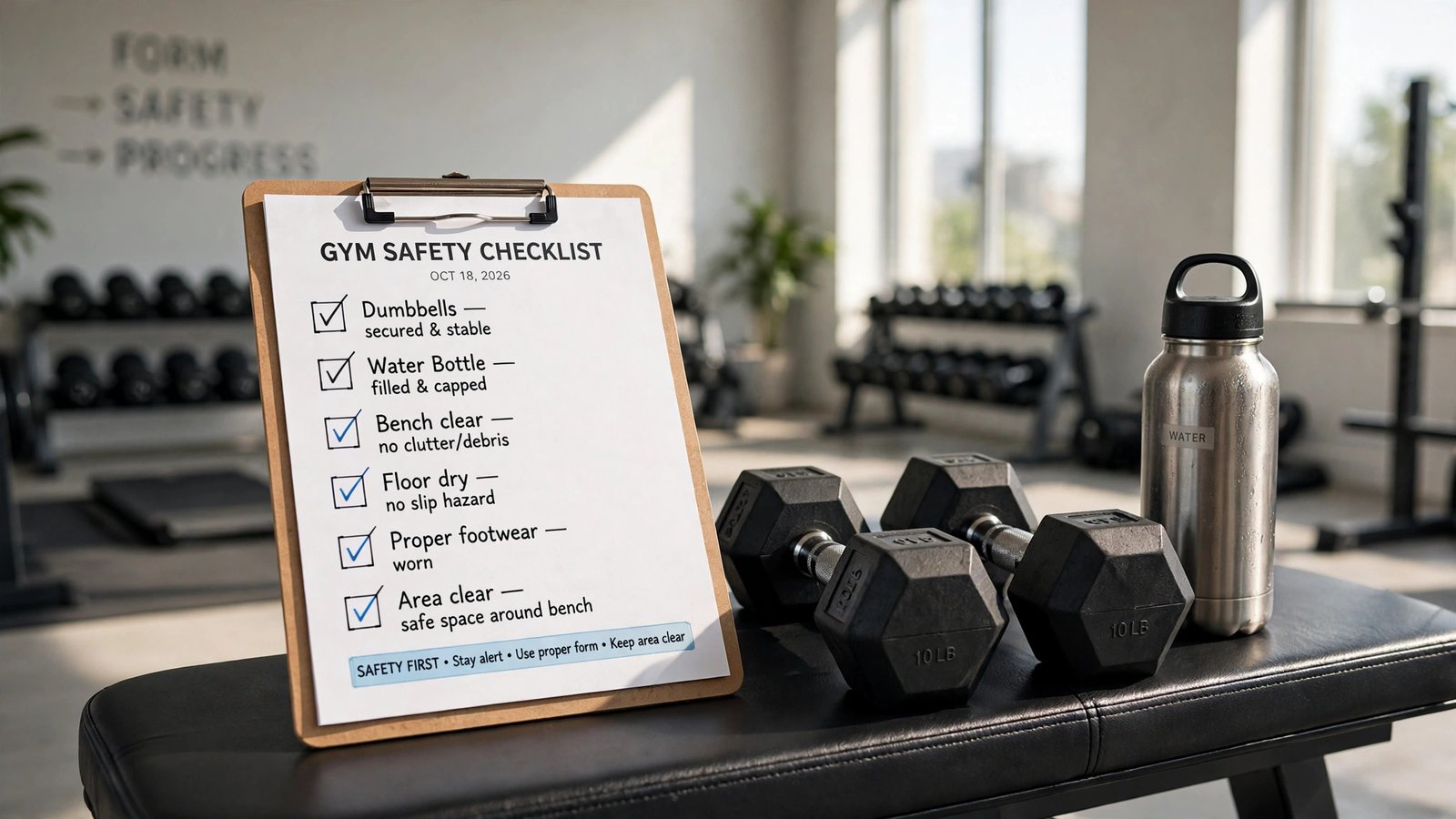
Check Four: Check that footwear and kit fit the surface and the task. Shoes that are worn unevenly, too tight across the toes or lacking grip for a damp surface change how force travels through feet, ankles and knees. Clothing that restricts a deep squat, a strap that digs in during presses, or a slippery floor underfoot all add small compensations that add up under load. Replace or adjust kit before it becomes a problem, and match it to the ground, whether track, trail, court, mat or gym floor.
Check Five: Have a plan written before the session starts. A written plan sets the main movements, the order, the intended effort and the stopping point, so decisions are made calmly in advance rather than in the heat of a competitive moment. It also makes progression visible across weeks, which removes the temptation to test everything at once. Leave room for adjustment on the day. If readiness is low, the plan should bend, not break the person following it.
Check Six: Name previous niggles plainly and work around them, not through them. A history of Achilles soreness, a grumbling knee or a shoulder that dislikes certain angles does not have to end training, but it does need respect. Choose variations that load the area gently or train around it while it settles, and note what eases and what aggravates it. Pretending a niggle is not there, then loading it exactly as before, is how a manageable irritation becomes a longer layoff.
During the session
Check Seven: Put technique before load, always. A clean repetition at a moderate weight trains the intended muscles and joints in the intended way, while a sloppy repetition at a heavier weight shifts stress to places less able to handle it. Slow down enough to feel position and stop a set when form breaks down beyond quick correction. For running and other repetitive work, the same rule applies to stride, posture and foot placement when tired. Good form under fatigue is built by refusing to practise poor form at speed.
Check Eight: Progress one variable at a time. Add a little weight, or a few more repetitions, or a touch more speed, or an extra set, but not all of them in the same session. Changing a single variable makes cause and effect clear: if soreness or pain follows, the reason is easier to spot and the next step is easier to adjust. It also keeps confidence grounded, because each advance is earned and repeatable.
Check Nine: Follow clear pain rules without negotiation. Dull muscular effort and the burn of hard work are expected parts of training, but sharp pain, joint pain and any pain that alters how you move should end that exercise straight away. Limping through a run, twisting away from a sore shoulder during a press or shortening a stride to protect a knee all teach compensations and raise risk elsewhere. Stop, note what happened, and choose a pain free alternative or finish for the day.
Check Ten: Attend to hydration and fuelling in simple, steady terms. Drink to thirst across the day and during longer sessions, rather than forcing large amounts at once or arriving already dry and hoping to catch up. Eat enough around hard days to support the work, with regular meals before and after demanding training so energy and recovery are not left to chance. Under fuelling often shows up first as irritability, poor concentration and sessions that feel harder than they should. Those are early warnings worth heeding.
Check Eleven: Keep a training log that records what was actually done, how it felt and any niggles that appeared. A log need not be elaborate; a few honest lines after each session are enough to reveal patterns that memory smooths over. The value of a structured approach is easy to see in the quick beginner’s guide to starting running, where graded progression week by week replaces guesswork with a calm sequence of small steps. When the log shows load climbing too fast or soreness lingering, the next session can be softened before trouble hardens.
Check Twelve: Use spotters, collars and safety bars for heavy work A trusted spotter for a near maximal press, collars that keep plates secure, and safety bars set at the right height inside a rack are basic protections, not signs of inexperience. Check the setup before the first heavy repetition and agree signals in advance. Fatigue makes setup errors more likely, so the check matters more late in a session.
Afterwards and between sessions
Check Thirteen: Cool down with easy movement rather than stopping abruptly. A few minutes of gentle walking, easy cycling or relaxed mobility work lets breathing settle, warmth fade gradually and stiffening tissues move while they are still warm. It is also a moment to notice which joints feel free, which muscles feel unusually tight and whether anything aches in a new way, and to note those observations while they are fresh.
Check Fourteen: Carry out the twenty-four-to-forty-eight-hour soreness audit in the day or two after training. Normal muscle soreness after unaccustomed work tends to feel dull and widespread, eases as you move and fades steadily across that window. Joint pain, sharp local pain, swelling and any limping do not follow that reassuring pattern and should be taken seriously. If soreness is still worsening rather than easing, reduce the next session and give the area more time.
Check Fifteen: Treat rest days and easy weeks as programmed parts of training, not as rewards or failures. Adaptation happens between sessions, when sleep, food and lower load allow tissues to repair and strengthen. An easy week after several building weeks often restores energy and allows small irritations to settle before they need attention. Skipping rest to chase faster progress usually produces the opposite result: flat performance, disturbed sleep and a rising list of minor pains.
Check Sixteen: Train strength balance by giving the supporting muscles deliberate attention. Calves and hamstrings support knees and ankles during running and lifting, the hips stabilise the pelvis and lower back, and the rotator cuff helps centre the shoulder during pressing and pulling. When only the prime movers are trained — the chest, the front of the thigh, the muscles most easily seen — the smaller supporters fall behind and joints lose guidance under load. A few focused sets for these areas each week help the whole system share work more evenly.
Some signs should never be trained through or explained away at home. Swelling that appears quickly, a joint that feels unstable or gives way, numbness or tingling that does not settle, and pain that changes gait all call for professional assessment rather than another hopeful session. The same applies when pain keeps returning in the same place despite reduced load. Reading about sports injuries, their types and causes can help a person describe what has happened more clearly, but it does not replace examination by someone qualified to test movement, strength and joint stability in person. Seeking help early often shortens recovery.
Modern soft tissue care has moved beyond the idea that complete rest alone is best. The PEACE and LOVE framework from sports medicine offers a calmer sequence. In the early stage, protect the area from further strain, elevate it where practical, avoid anti-inflammatories early unless a professional advises otherwise, apply compression if it helps and feels comfortable, and seek education about what the injury needs. After those early days, the emphasis shifts to load introduced gradually, optimism about recovery, vascularisation through pain free movement that raises circulation, and exercise chosen to restore strength and control. For many people, that guided return is where physical therapy and how rehabilitation works becomes central, because a professional can grade exercises, correct movement and judge readiness far more safely than guesswork. The aim is simple: train hard enough to improve, gently enough to continue, and honestly enough to stop when the body asks for a different plan.