
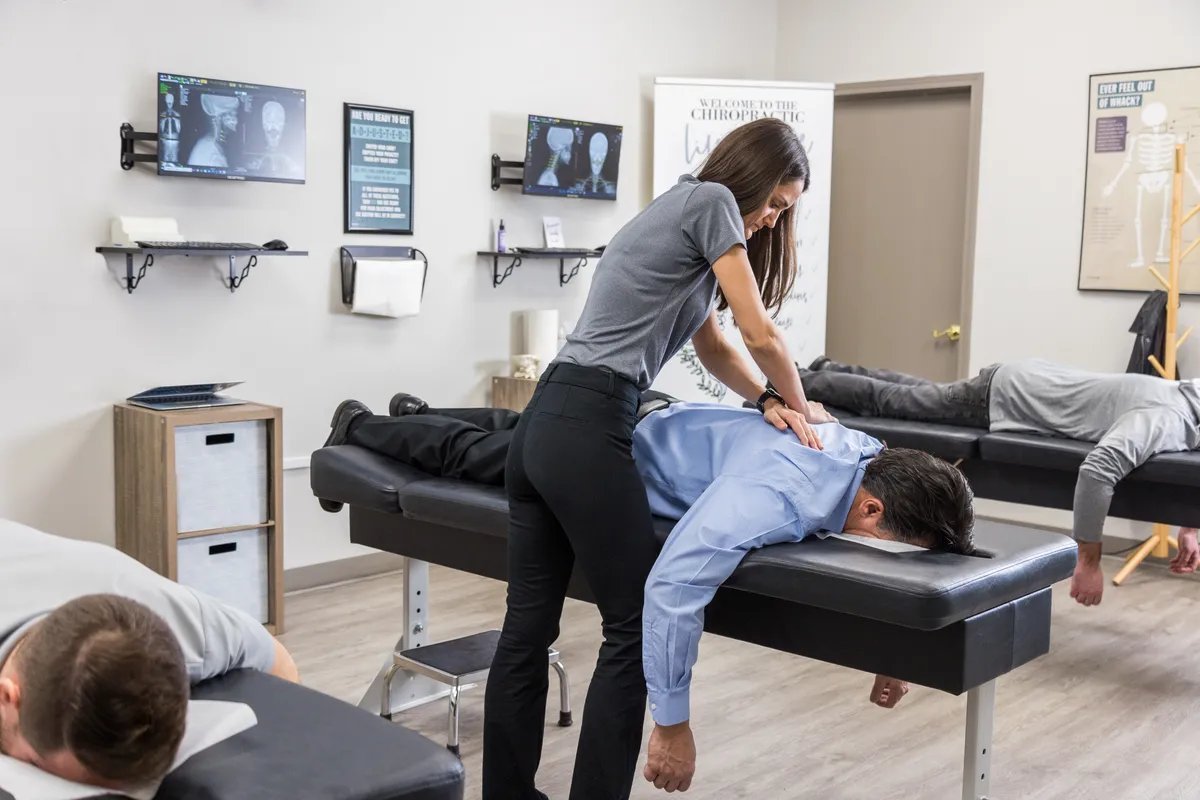
To become a chiropractor in the United States, you need an undergraduate education (a bachelor’s degree, or at minimum 90 semester hours in most states), a Doctor of Chiropractic (DC) degree from an accredited chiropractic program, passing scores on all four parts of the National Board of Chiropractic Examiners (NBCE) exams, and a license in the state where you plan to practice. The whole path takes roughly seven to eight years after high school, and there is no shortcut around the doctoral degree or the licensing exams.
Chiropractic is one of the most accessible doctoral-level healthcare careers. Unlike medical school, chiropractic programs do not require the MCAT, and admission is based on your undergraduate GPA, prerequisite science courses, and an interview. The trade-off is an intensive full-time DC program and significant student debt, so it is worth understanding every step before you commit.
What Chiropractors Actually Do
Chiropractors diagnose and treat neuromusculoskeletal problems, most often through spinal adjustments and manual manipulation. A typical day involves evaluating patients with back pain, neck pain, headaches, and joint issues, developing treatment plans, and performing adjustments. Many chiropractors run their own practices, which means the job blends clinical work with small-business management.
It is important to understand the scope of the profession. Chiropractors are not medical doctors and do not prescribe medication or perform surgery. In all 50 states they are licensed as portal-of-entry providers, meaning patients can see them directly without a referral, but the scope of what they can do (such as ordering imaging or performing certain therapies) varies by state. If you want a drug-free, hands-on approach to musculoskeletal care, chiropractic fits. If you want to prescribe or operate, becoming a physician is the route to explore instead.
Step-by-Step Path to Becoming a Chiropractor
- Finish high school with strong science grades. Biology, chemistry, physics, and anatomy courses build the foundation you will need later. A solid GPA now makes college and chiropractic school applications easier.
- Earn a bachelor’s degree (or 90+ semester hours). Most chiropractic schools require a bachelor’s degree, though a few states and programs accept 90 semester hours of undergraduate coursework. Major in biology, kinesiology, exercise science, or any field that lets you complete the science prerequisites: general biology, general chemistry, organic chemistry, physics, and psychology are the usual requirements.
- Apply to an accredited DC program. Choose a program accredited by the Council on Chiropractic Education (CCE), because graduation from a CCE-accredited school is required for licensure in every state. There are fewer than 20 such programs in the US. Applications typically require transcripts, letters of recommendation, a personal statement, and an interview. No MCAT is required.
- Complete the Doctor of Chiropractic program. The DC program runs about 3 to 4 years (roughly 10 trimesters) of full-time study. Expect heavy coursework in anatomy, physiology, pathology, radiology, nutrition, and chiropractic technique, plus hundreds of hours of supervised clinical training treating real patients in the school’s clinic.
- Pass the NBCE board exams. During and after chiropractic school, you must pass Parts I, II, III, and IV of the NBCE exams, which cover basic sciences, clinical sciences, clinical competency, and practical skills. Most students take Parts I and II during school and Parts III and IV near graduation.
- Get licensed in your state. Apply to your state chiropractic board, which will verify your education and NBCE scores. Some states add a jurisprudence exam on local laws. A few states also require a background check or additional clinical hours.
- Start practicing. New graduates typically join an established practice as an associate, open their own clinic, or work in multidisciplinary settings like rehab centers and sports medicine clinics. You will also need malpractice insurance and, in most states, continuing education hours each year to keep your license active.
How Long Does It Take?
The standard timeline is four years of undergraduate study plus three to four years of chiropractic school, totaling seven to eight years after high school. Students who enter a DC program with 90 semester hours instead of a full bachelor’s degree can shave off about a year, and some schools offer accelerated tracks. Licensing paperwork and board exams usually add a few months after graduation before you can see patients independently.
How Much Does Chiropractic School Cost?
Tuition at chiropractic colleges typically runs $15,000 to $25,000 per year, putting total tuition for the DC program somewhere between $60,000 and $100,000, and total student debt (including undergraduate loans and living costs) often lands between $150,000 and $200,000 for new graduates. Before borrowing, compare schools on tuition, graduation rates, and NBCE pass rates, and read our guide on how to pay for medical school — many of the same federal loan and scholarship strategies apply to chiropractic students too.
Chiropractor Salary and Job Outlook
According to the U.S. Bureau of Labor Statistics, chiropractors earn a median annual wage of roughly $76,000, with the top 10 percent earning well over $135,000. Income varies widely because so many chiropractors are self-employed: a busy practice owner in a good location can earn far more than a new associate. Employment is projected to grow about 10 percent over the coming decade, faster than the average for all occupations, driven by an aging population and continued demand for non-drug pain management. For broader context on physician-level earnings, see our doctor salary guide.
Frequently Asked Questions
Do you need a bachelor’s degree to become a chiropractor?
In most cases, yes. Nearly all CCE-accredited DC programs require a bachelor’s degree, and several states require one for licensure. A handful of programs still admit students with 90 semester hours, but earning the full degree keeps every option open and strengthens your application.
Do chiropractors take the MCAT?
No. Chiropractic programs do not require the MCAT. Admission is based on undergraduate GPA (usually a minimum around 3.0), prerequisite science courses, recommendations, and an interview.
How hard are the NBCE board exams?
They are demanding but very passable with preparation. Parts I and II test basic and clinical sciences with multiple-choice questions, while Part IV is a practical exam where you demonstrate examination and adjustment skills on simulated patients. Schools with high first-time pass rates are worth prioritizing when you choose a program.
Can chiropractors practice in any state with one license?
No. Chiropractic licenses are issued state by state. If you move, you must apply for licensure in the new state, though your NBCE scores transfer and most states have streamlined endorsement processes for already-licensed chiropractors.
Sources: U.S. Bureau of Labor Statistics — Chiropractors, National Board of Chiropractic Examiners