
Buyers decide how they feel about your home within seconds of walking in — and then spend the rest of the tour justifying that feeling. Staging is the art of engineering those first seconds: not deceiving anyone, but removing every friction between the buyer and the thought “I could live here.” Staged homes photograph better, show better, and statistically sell faster and for more — the National Association of Realtors has documented the effect repeatedly.
This is your room-by-room plan for staging your home to sell quickly: the psychology behind it, the $500 whole-house refresh, what to do in each key room, photography that multiplies it all, curb appeal on a budget, and the mistakes that cost sales.
The Psychology: Sell the Lifestyle, Not the House
Buyers do not buy square footage; they buy a vision of their life unfolding in the space. Staging serves that vision through three principles. Depersonalize: family photos, political items, bold collections, and highly personal décor prevent buyers from mentally moving in — they feel like guests in your home rather than owners of theirs. Declutter ruthlessly: every surface should be 70% clear — clutter makes rooms feel smaller and suggests inadequate storage. Neutralize: not sterile-white-boring, but broadly appealing — warm neutrals, natural textures, and restrained color let the widest range of buyers project themselves into the space. You are not erasing personality; you are widening the audience.
The $500 Whole-House Refresh
Before room specifics, the highest-ROI $500 in home selling: deep clean everything ($0–$200 DIY or pro) — buyers equate cleanliness with maintenance; a spotless home whispers “well cared for.” Declutter into storage ($50–$100 for boxes/storage unit) — remove 30–50% of furniture and nearly all knickknacks; sparse rooms photograph twice as large. Fresh neutral paint in the worst rooms ($100–$150 in paint) — the single highest-return cosmetic improvement in real estate. Lighting upgrades ($50): replace dim bulbs with bright daylight LEDs (100W equivalent), add a floor lamp to dark corners — bright homes feel bigger and happier. Hardware refresh ($50–$100): new cabinet pulls and a modern faucet aerator date-stamp a kitchen a decade newer. Total: ~$500, often returning tenfold in perceived value.
Room by Room: Where It Matters Most
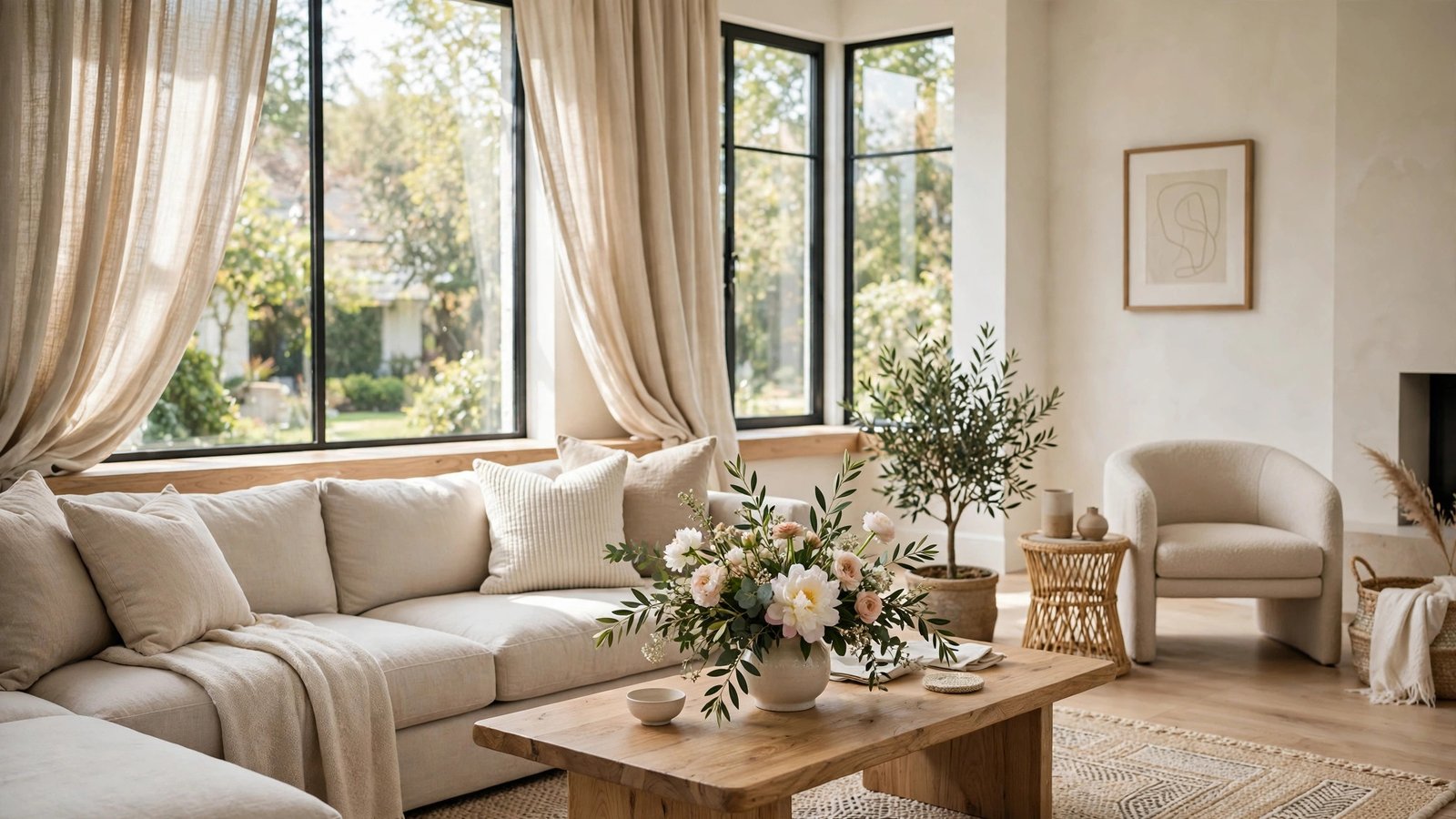
Living room: define one clear purpose per space (the “office/guest/playroom” flex room confuses buyers — pick one). Arrange furniture to showcase size and flow — float pieces away from walls, which paradoxically makes rooms feel larger. One statement piece, minimal accessories.
Kitchen: clear counters to near-empty (one bowl of fruit, one cookbook stand — that is it). Clean appliances until they gleam; replace stained caulk. The kitchen sells the home more than any other room — it must feel abundant and effortless.
Primary bedroom: hotel-bed styling — crisp white or neutral bedding, symmetrical nightstands with lamps, zero clutter. Buyers should feel calm the instant they enter.
Bathrooms: new shower curtain, rolled white towels, hidden toiletries, bleached grout. Bathrooms are judged on cleanliness alone — there is no “charm” that overcomes grime.
Closets and storage: half-empty them. Buyers open every door, and stuffed closets scream “not enough storage” — the fastest way to kill an otherwise perfect showing.
Small-space tricks help enormously here — the principles in improving curb appeal on a budget and easy DIY projects that increase home value overlap heavily with staging, since both are about perceived value per dollar. And inside, details like choosing the right rug size anchor rooms the way stagers intend — too-small rugs are a classic amateur tell.
Photography: The Showing Before the Showing
Over 90% of buyers first encounter your home online — the photos are the first showing. Professional real estate photography ($150–$300) is the best-spent money in the entire selling process; listings with pro photos get dramatically more views and showings. If shooting yourself: photograph on a bright overcast day or with all lights on, shoot from chest height in corners (widest honest angle), keep verticals vertical (no tilted “artistic” angles), declutter ruthlessly before each shot, and never use wide-angle distortion that misrepresents room size — disappointed in-person buyers do not make offers. Twenty great photos beat forty mediocre ones.
Curb Appeal: The 30-Second Audition
Buyers form opinions before leaving the car. The fast wins: mow and edge the lawn, trim bushes below window height, mulch the beds ($50 in bags transforms everything), power-wash the driveway and siding, paint or replace a worn front door (a $40 gallon of paint in a confident color), update the house numbers and mailbox, and add two symmetrical planters flanking the entrance. Evening showings? Ensure the path lighting works — a dark entry feels unsafe regardless of the neighborhood. Total investment: a weekend and ~$150, for the highest-leverage first impression in the sale.
Mistakes That Cost Sales
Over-staging into sterility: a home with zero personality feels cold — warmth sells, emptiness unsettles. Keep some life: fresh flowers, a throw blanket, the smell of nothing (not air freshener — just clean).
Ignoring smells: pet odors, cooking smells, and mustiness kill deals subconsciously — deep-clean soft furnishings, and never mask with heavy fragrance.
Leaving during showings wrong: actually, do leave — sellers hovering make buyers rush and withhold honest reactions.
Repairs left visible: the dripping faucet, the cracked switch plate — buyers extrapolate from visible neglect to hidden disasters. Fix the $5 things.
Pricing against the staging: beautiful staging on an overpriced home just means more people see the overpricing. Stage and price right — the combination is what sells quickly. The NAR’s staging reports quantify the effect: staged homes consistently sell faster, with the living room, kitchen, and primary bedroom delivering the highest returns on staging effort. HUD’s home-selling resources also cover the legal and financial side of the sale, from required disclosures to closing timelines.
Conclusion
Staging your home to sell quickly is applied buyer psychology: depersonalize, declutter, and neutralize; execute the $500 whole-house refresh; stage each key room to its purpose; invest in professional photography; nail the 30-second curb appeal audition; and avoid the sterility, smell, and pricing mistakes that undo it all. You are not decorating for yourself anymore — you are merchandising a lifestyle the broadest set of buyers can see themselves living. Do it well, and the sold sign follows faster than the market average. The weekend you spend staging is the highest-paid weekend of the entire selling process — often worth thousands per hour invested.
Frequently Asked Questions
How much does home staging cost?
DIY staging runs $200–$500 (paint, storage, minor updates); professional staging averages $1,500–$4,000+ depending on home size and duration. Even the DIY version delivers most of the benefit — decluttering and depersonalizing are free.
Is staging worth it for a seller’s market?
Yes — even in hot markets, staged homes attract more offers and stronger terms. In a bidding war, the staged home is the one buyers stretch for emotionally, which translates directly into dollars.
Should I stage a vacant home?
Vacant homes feel smaller and colder than furnished ones — buyers cannot gauge scale. At minimum, stage the living room, kitchen, and primary bedroom (virtual staging for photos plus light physical staging for showings is a cost-effective hybrid).
What rooms matter most for staging?
The living room, kitchen, and primary bedroom — in that order. Bathrooms matter for cleanliness rather than décor. Closets matter for emptiness. Everything else is supporting cast.