
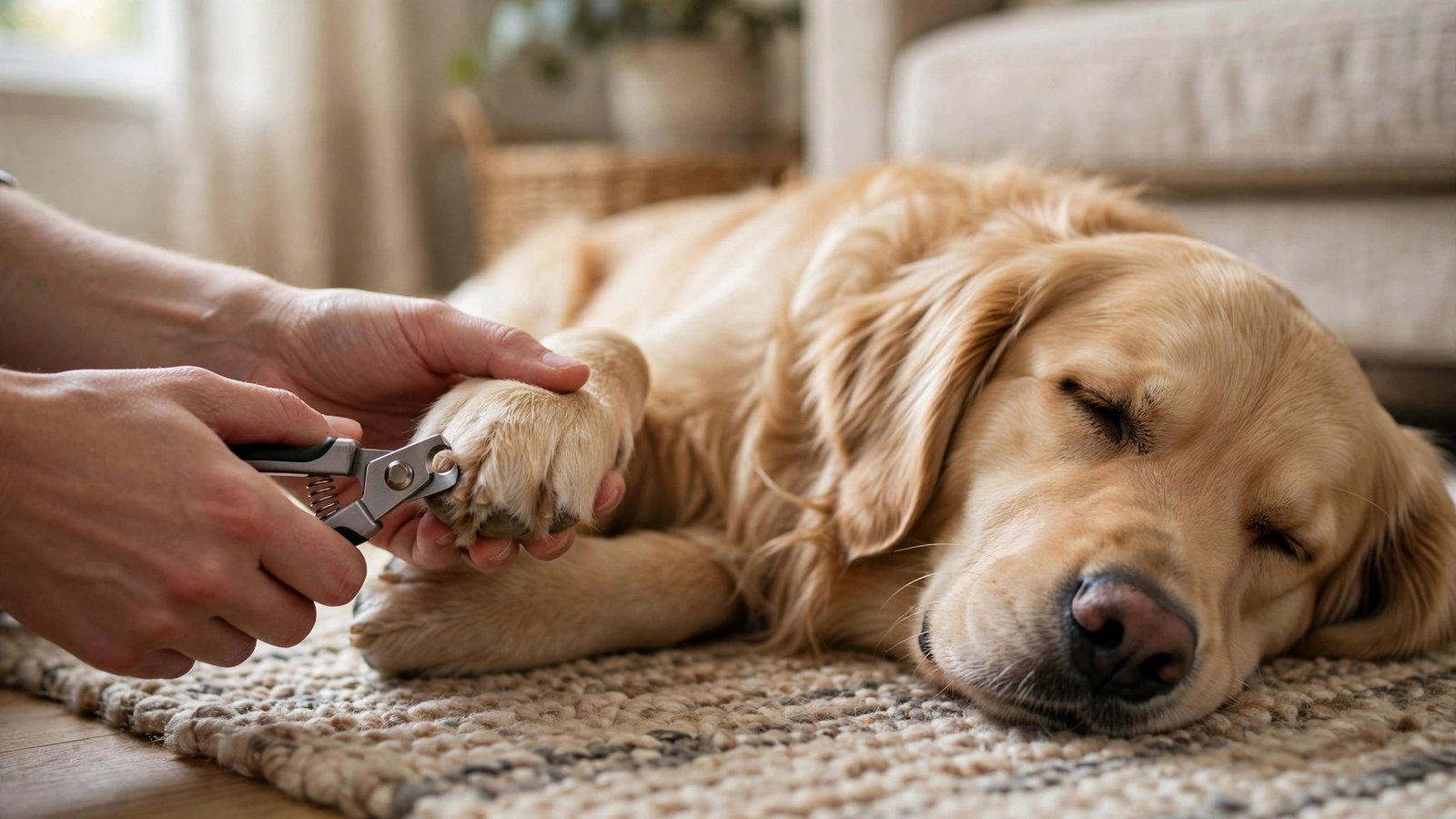
Somewhere in your home right now, a dog is clicking across the floor like a tap dancer, or a cat is getting stuck on the couch — nature’s way of telling you nail-trim time has come. And for most pet owners, those words trigger a familiar dread: the fear of cutting too deep, the wrestling match, the guilt. Here is the truth groomers know: nail trimming is a skill, not a talent, and the fear disappears once you understand the anatomy and the approach.
This guide walks you through trimming your pet’s nails without fear: the tools worth buying, the “quick” explained, a desensitization protocol that works over days (not minutes), the actual trimming technique step by step, what to do if you nick the quick, and when to hand the job to a professional.
Understand the Quick: The Source of All Fear
Inside each nail is the “quick” — a bundle of blood vessels and nerves. Cut it and it bleeds and hurts; avoid it and the trim is painless. On light-colored nails, the quick is visible as the pinkish core — your cut line stays in the pale, translucent tip beyond it. On dark nails, you cannot see it, so you trim in thin slices and watch the cross-section: when the center turns from dry and flaky to a darker, moist-looking dot, stop. That dot is the quick approaching.
One more reassurance: even professionals nick the quick occasionally. It looks dramatic — nails bleed impressively — but it is not an emergency. Knowing exactly what to do (see below) removes the catastrophe framing that makes the whole task scary. The American Veterinary Medical Association notes that regular nail maintenance prevents far worse problems — overgrown nails that curl into paw pads, splay toes, and alter gait, causing joint pain over time. The ASPCA and the American Animal Hospital Association both list nail care among the core preventive routines every pet owner should master.
Choose Your Tool: Clippers vs. Grinders
Guillotine or scissor clippers are fast and cheap ($8–$15). Scissor-style suits most dogs; guillotine-style works well for small dogs and cats. Keep the blade sharp — dull clippers crush rather than cut, which hurts and splinters. Replace them yearly with regular use.
Nail grinders (like a Dremel with a pet attachment, $25–$40) file the nail down gradually — slower, but nearly impossible to quick a nail with, which makes them the fear-free choice for nervous owners and dark-nailed dogs. The downsides: noise and vibration (some pets hate it) and the time it takes. Many groomers use a hybrid: clip the bulk, grind smooth.
Also buy styptic powder ($6–$10). This clotting agent stops quick-bleeding in seconds and is the single purchase that converts panic into calm. Cornstarch works in a pinch, but the real product works faster.
The Desensitization Protocol: Days, Not Minutes
Here is where most people fail: they grab the dog, grab the clippers, and start cutting. Instead, spend three to five days on this ladder, a few minutes at a time, pairing every step with high-value treats:
Day 1–2: Touch and hold each paw while treating. No tools in sight. Goal: paws are boring.
Day 3: Introduce the tool — let them sniff it, touch it to the paw, treat. If using a grinder, run it nearby (not on the nail) while treating, so the sound predicts chicken, not danger.
Day 4: Touch the tool to each nail briefly, treating throughout. Practice the holding position you will use.
Day 5: Trim one nail. One. Treat lavishly, then stop. End on a win.
Build from there — two nails, then a paw, then all four across a session. Rushing this protocol is the number one cause of pets who “hate” nail trims; the hatred is really about the ambush, not the trim. Patience here pays off for years.
The Trimming Technique, Step by Step
Set up in good light with treats in reach and styptic powder open beside you. Hold the paw firmly but gently, isolating one toe. For dogs, the natural nail angle means cutting from underneath at roughly 45 degrees, taking thin slices off the tip. For cats, gently press the paw pad to extend the claw, and clip only the sharp curved tip — never the thicker base.
Work in this order: do the “easy” nails first while everyone is calm, take breaks between paws, and stop the session while it is still going well rather than pushing through all nails in a marathon. Two calm sessions a week apart beat one traumatic full set. Frequency matters more than perfection: trim every 2–4 weeks (you will hear the clicking when it is time), because the quick recedes with regular trimming, making each future session easier and safer.
If You Cut the Quick: The 60-Second Fix
Stay calm — your pet takes emotional cues from you. Apply styptic powder with gentle pressure for 10–15 seconds; bleeding typically stops within a minute or two. Offer a treat, take a break, and resume later or another day. Do not punish, do not panic, and do not abandon the whole project — one nick does not ruin the training. If bleeding does not stop after 10 minutes of pressure, call your vet, but this is rare.
Watch for signs your pet needs professional help instead: nails curling into pads, extreme aggression around paws (possible pain or injury — have the vet check), or your own anxiety so high it transfers to the animal. There is no shame in outsourcing; many vet clinics offer walk-in nail trims for $15–$25. A calm professional trim beats a traumatic home attempt every time — and a freshly groomed pet is a better travel companion too, whether you are learning how to find pet-friendly hotels when traveling or traveling with a service dog, where good grooming is often expected.
Conclusion
Trimming your pet’s nails without fear is a three-part formula: understand the quick, desensitize over days instead of ambushing, and trim in thin, calm slices with styptic powder at hand. The first full session is the hardest; by the third, it is routine maintenance — five quiet minutes that prevent painful overgrowth and vet bills. Your pet is not afraid of the clippers. They are afraid of the surprise. Remove the surprise, and the fear goes with it.
Frequently Asked Questions
How often should I trim my pet’s nails?
Every 2–4 weeks for most dogs and indoor cats. If you hear clicking on hard floors, they are overdue. Regular trimming also causes the quick to recede, making future trims easier and safer.
Can I use human nail clippers on my pet?
For cats and very small dogs, human clippers can work on the thin tips, but pet-specific clippers are shaped for the nail’s curve and crush less. For medium and large dogs, always use proper pet clippers or a grinder.
What if my dog will not let me touch their paws at all?
Go back to the desensitization ladder and move slower — some dogs need two weeks, not five days. Pair every paw touch with exceptional treats. If there is aggression, consult your vet first to rule out pain, then consider a professional groomer or a vet-supervised plan.
Is it better to clip or grind dark nails?
Grinding is generally safer for dark nails since you remove tiny amounts and can see the quick approaching as a dark dot in the cross-section. Many owners clip the bulk and finish with the grinder for a smooth, safe edge.