
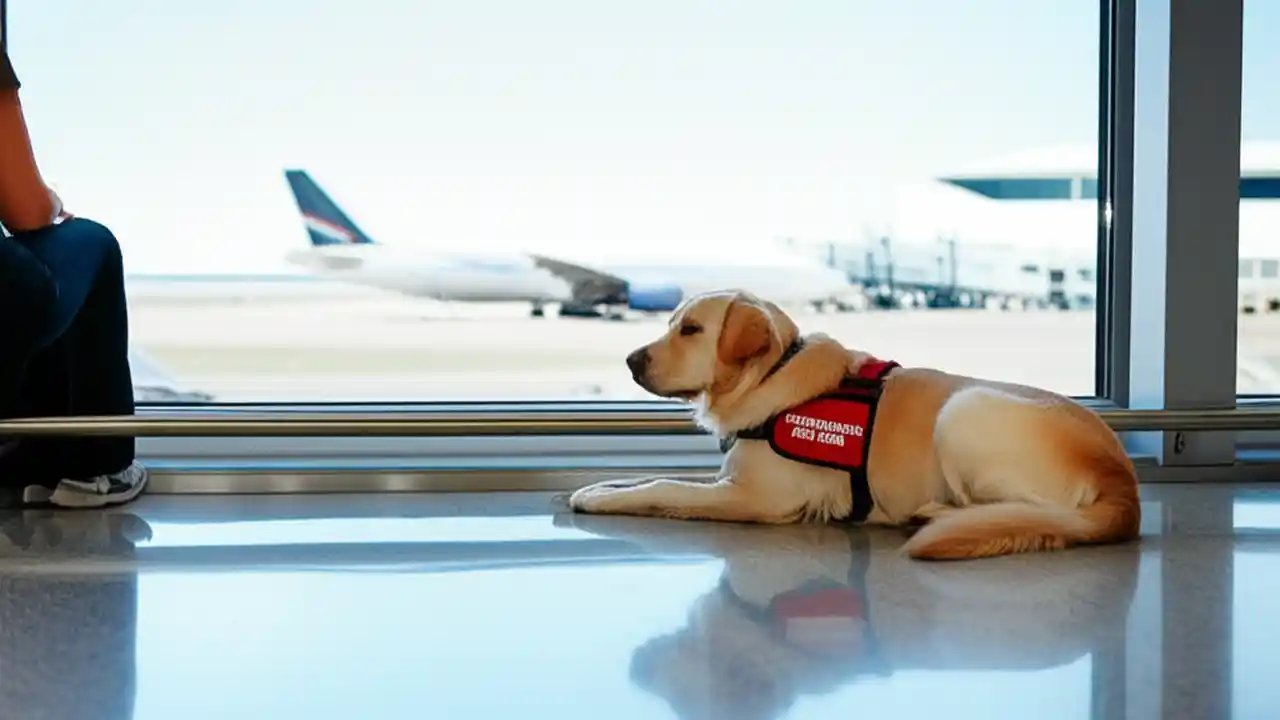
Traveling with a service dog adds a layer of planning to every trip, but thousands of handlers fly successfully every week. The key is knowing the current federal rules — they changed a few years ago, and a lot of outdated advice is still floating around online.
I’m going to walk you through what airlines can and can’t ask you, the paperwork you’ll need, and the practical stuff nobody tells you until you’re standing at the gate. Whether this is your first flight together or your fiftieth, a quick refresher never hurts.
What Do I Need to Know About Traveling With a Service Dog? The DOT Rules
Under the US Department of Transportation’s current rules, airlines must allow service dogs that are individually trained to perform tasks for a person with a disability. Emotional support animals no longer qualify as service animals for air travel — they’re treated as pets now, which means pet fees and carrier rules apply. This is the single most misunderstood part of flying with an assistance animal.
Airlines are allowed to require two DOT forms: the Service Animal Air Transportation Form and, for flights over eight hours, the Service Animal Relief Attestation Form. You can download both from the DOT’s service animal page and most airline websites. Fill them out honestly — misrepresenting a pet as a service animal can get you fined and banned.
The airline may ask you two questions: whether the dog is required because of a disability, and what task the dog has been trained to perform. They cannot ask about the nature of your disability, demand a demonstration, or require special vests or ID cards. If a gate agent pushes beyond those two questions, you can politely decline and ask for a complaint resolution official.
Paperwork and Booking: Get It Done Early
Book directly with the airline when possible and add your service dog to the reservation at least 48 hours before departure. Most airlines have an online service-animal request process now — submit the DOT forms through their portal and keep a copy on your phone. I’ve seen handlers breeze through check-in because everything was pre-approved, and I’ve seen others stuck at the counter for 40 minutes because they waited until the airport.
Your dog’s vaccinations should be current, and while airlines don’t universally require a vet health certificate for domestic flights, some international destinations absolutely do. If you’re flying abroad, start the country-specific paperwork weeks ahead — some places require rabies titers or quarantine reservations. A call to your vet a month before travel saves panic later.
Seat selection matters more than people realize. Bulkhead seats give your dog the most floor space, and they’re usually free to select if you call the airline’s accessibility desk. Avoid exit rows entirely — service animals can’t be seated there by regulation.
At the Airport: Security, Relief Areas, and Boarding
At TSA screening, you’ll walk through the metal detector with your dog on leash while your belongings go through the X-ray. TSA officers may swab your hands — that’s routine, not suspicion. Your dog’s collar, leash, and harness go through the X-ray separately. The process is quick once you’ve done it once, and the TSA’s guidance for travelers with disabilities spells out exactly what to expect.
Every US airport is required to have pet relief areas, and most now have them inside the secure area — look for the paw-print signs. Visit one before boarding even if your dog doesn’t seem to need it; a long flight is much easier on a dog with an empty bladder. Bring waste bags and a small towel, because some relief areas are better maintained than others.
Board early. Pre-boarding lets you settle your dog into the foot space without an audience squeezing past. Bring a familiar mat or blanket so your dog has a defined spot, plus a chew toy and a few treats. Most service dogs settle within minutes once they know where their place is.
- DOT Service Animal Air Transportation Form — submitted 48+ hours ahead
- Relief Attestation Form for flights over 8 hours
- Current vaccination records on your phone
- Waste bags, collapsible water bowl, treats, chew toy
- Familiar mat or blanket for the foot space
- Your airline's accessibility desk number saved in contacts
If Something Goes Wrong
Even with perfect preparation, things happen: a gate agent who doesn’t know the rules, a seatmate with a severe allergy, a delayed flight that stretches past your dog’s comfort limit. Stay calm and document everything. Ask for names, take notes on your phone, and request a complaint resolution official if you’re being denied boarding improperly.
For delays, know where the relief areas are in every terminal you might get stuck in — this is where that pre-flight airport map check pays off, just like planning for a comfortable long layover does. Feed your dog on something close to their normal schedule, and don’t skip water because you’re worried about accidents; dehydration is worse.
After the trip, file feedback with the airline if anything went poorly. DOT tracks service-animal complaints, and patterns of violations do lead to enforcement. You’re not just advocating for yourself — you’re making the next handler’s trip smoother.
Connecting Flights and Long Travel Days With Your Service Dog
Long travel days test even the most experienced service dog teams. If your itinerary includes connections, build in at least 90 minutes between flights — tight connections with a service dog are stressful for both of you, and a missed connection with a tired dog is far worse than a longer layover. Use the extra time to visit the relief area, offer water, and let your dog decompress away from the terminal chaos. The same pacing strategies that prevent traveler exhaustion apply doubly when you’re responsible for an animal’s comfort too.
Feeding schedules deserve thought on travel days. Many handlers feed a slightly smaller breakfast before flying to reduce the need for mid-travel relief, then feed normally upon arrival. Bring your dog’s regular food in your carry-on — checked bags get lost, and a diet change plus travel stress is a recipe for digestive trouble. A few familiar treats go a long way toward rewarding calm behavior in overwhelming airport environments.
Know the rules at your destination, not just in the air. Service dog access laws vary by country and even by US state in their details, and some international destinations have quarantine requirements that make short trips impractical. A quick check of local regulations before you book prevents heartbreaking surprises at the border. Domestic US travel is the most straightforward — the ADA’s public-access protections are broad — but hotels, rideshares, and restaurants each have their own practical realities worth preparing for.
Quick Checklist Before You Fly
Submit the DOT forms at least 48 hours ahead, book a bulkhead seat through the accessibility desk, locate relief areas before you board, and know your rights cold. Traveling with a service dog takes preparation, but the system is designed to work for legitimate teams. Keep your paperwork on your phone, your dog’s routine as normal as possible, and you’ll both handle the journey just fine.