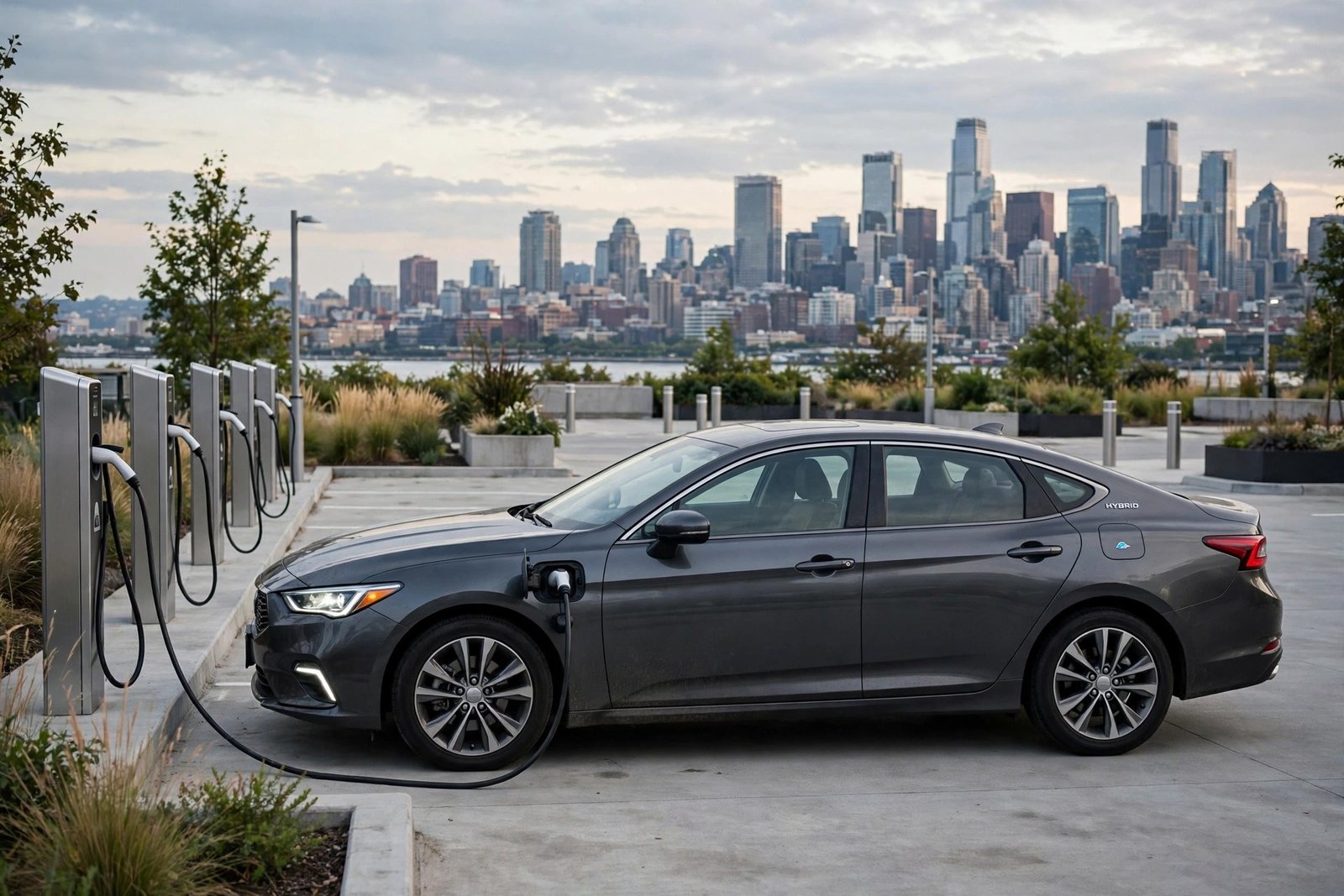
The hybrid badge used to mean compromise; the interesting question now is who the compromise has quietly moved to. For years the choice felt simple to describe. A gas car asked nothing new of its driver. A full electric car asked for a different routine around charging. A hybrid sat awkwardly between the two and seemed to give up something on both sides. That picture no longer holds. Modern hybrids have become ordinary, capable cars that happen to burn far less fuel, while the real compromises now sit with buyers whose driving pattern does not match what a hybrid does best.
The case for: fuel savings without changing your life
The headline strength is fuel savings that arrive without any change in daily habits. There is no plugging in at night, no route planning around chargers, no mental math about range on a long trip, and no new routine to learn. The car still fills up at a normal fuel station, only far less often. For drivers who cover a lot of miles, that difference adds up quietly week after week, and it does so without asking for patience or planning in return.
City driving is where the advantage grows widest. Stop-and-go traffic is punishing for a gas-only car, which burns fuel while sitting still and wastes energy every time it brakes. A hybrid handles that pattern in a smarter way. The electric side helps the car move off smoothly, the engine can rest more often, and braking puts some energy back instead of turning all of it into heat.
Buyers who are also weighing a full electric car against a hybrid face a different kind of comparison, one about charging access, trip patterns, and comfort with a new routine as much as about running costs. Anyone in that position will find it useful to read a beginner’s guide to electric cars, from charging to costs alongside the hybrid case, because the right answer depends heavily on home charging and daily mileage. A hybrid asks for none of that groundwork, which is precisely its appeal for households without a driveway charger or with a varied mix of short and long journeys.
Underneath the badge, the basic idea is straightforward. A gasoline engine and an electric motor share the work, with a battery storing energy recovered during braking and supplying it again when the car accelerates or crawls in traffic. The system shifts between the two power sources on its own, so the driver simply drives. Readers who want the plain mechanics laid out clearly can follow how a hybrid vehicle works for a fuller explanation of the setup.
The case for: a calmer ownership experience
The second case for a hybrid has less to do with fuel and more to do with peace of mind. The old fear that the battery would fail early and cost a fortune has faded for good reason. Modern hybrid batteries are built to last for the life of the car in normal use, and makers stand behind them with long warranties that reflect that confidence.
Day-to-day wear also tends to be gentler. Brakes last longer because regeneration does much of the slowing, so the friction brakes are used less and replaced less often. The gasoline engine works less hard and rests more often, which eases strain across the whole system. Servicing stays ordinary. A hybrid does not need exotic care or a specialist for routine work, and running costs beyond fuel tend to sit close to those of a comparable gas car.
Reliability data points the same way. Consumer Reports consistently rates Toyota and Lexus hybrids among the most reliable cars sold, and that pattern has held across many model years and many different body styles. For a buyer who values a calm ownership experience above excitement, that record carries real weight. A car that starts every morning and asks for little beyond scheduled care solves the problem most households actually have.
The case against: the premium and the payback
The honest weakness starts at the sticker. A hybrid usually costs more upfront than the closest gas-only version of the same car, and that premium only makes financial sense under certain conditions. Drivers who cover a lot of miles and keep the car for many years give the fuel savings time to repay the extra cost and then keep saving. Drivers who cover few miles each year spread those same savings so thinly that the payback may never arrive within their ownership. The car can still be pleasant and efficient, but pleasant and efficient is not the same as money saved.
That math deserves care because it changes from household to household. Fuel prices, annual mileage, the size of the premium on the exact model under consideration, and how long the car will be kept all move the answer. There is no universal verdict. A commuter with a long daily drive reaches the break-even point far sooner than a household that mostly makes short weekend trips. Anyone considering a hybrid for financial reasons should run the simple calculation honestly, dividing the extra purchase cost by the expected yearly fuel saving, and then judge whether the resulting timeline fits real plans for keeping the car.
One older shortcut no longer helps. Federal clean-vehicle credits have ended, so buyers cannot count on a credit to erase part of the premium at purchase time. That change makes the underlying math more important, not less. Without outside help, the case rests entirely on mileage, fuel prices, and length of ownership. For the right driver the numbers still work well. For the wrong driver they do not, and no amount of enthusiasm for the technology changes that.
The case against: where hybrids still compromise
Even where the money works, other compromises remain. Models tuned hardest for economy are rarely exciting to drive. They are smooth, quiet, and perfectly adequate, but buyers looking for sharp responses or a sense of fun will often find them bland.
Practical space can also shrink. The battery has to live somewhere, and in some models that means a smaller cargo area or a less flexible load space than the gas-only version offers. Towing is a sharper limit still. Car-based hybrids generally tow little or nothing, so households that regularly pull a trailer, a boat, or a small camper need to look carefully at ratings and will often need a different kind of vehicle altogether. Trim choice tends to be narrower as well, with fewer combinations on offer and thinner discounts because demand stays steady. Buyers who love hunting for a bargain or who want a very specific specification may find the hybrid range frustratingly limited.
Cold weather adds one more honest footnote. Efficiency falls in winter for every car, but it falls further in a hybrid because the engine runs to provide cabin heat, which reduces the time the car can rely on electric help. The emissions picture needs the same honesty. A hybrid cuts emissions in a real and worthwhile way compared with a gas-only car, yet the cut is partial rather than complete. The engine still burns fuel on most journeys. For buyers whose main motive is environmental, a hybrid is a strong step in the right direction rather than the final destination, and that distinction is worth keeping clear.
Plug-in hybrids: the middle option with one condition
Plug-in hybrids are a distinct third option rather than a slightly stronger version of a standard hybrid. The idea is simple. A larger battery that can be charged from a socket allows electric running for daily trips, while a gasoline engine remains available for longer journeys without any worry about finding a charger.
The condition attached to that promise is absolute. The car must actually be plugged in, regularly and as a habit. A plug-in hybrid that is rarely charged becomes a heavier and pricier standard hybrid, carrying a large battery that earns little while adding weight on every trip. The extra cost buys nothing in that pattern of use, and fuel use can disappoint compared with expectations set by the brochure. Buyers need to be honest about routine and access before choosing this route. Home charging that is easy and automatic makes the option shine. Charging that is awkward, shared, or easy to postpone quietly undermines the whole case. Readers who want the distinction spelled out in full can look at how a plug-in hybrid differs from a standard hybrid and from a full electric car.
The verdict: who should buy one, and who should think twice
The buyers who gain most are easy to describe. High-mileage commuters and city drivers sit at the front of the queue, because their pattern of use turns fuel savings into real money and makes the payback timeline short. Long keepers benefit for the same reason, since holding the car for many years gives efficiency time to outweigh the premium. Households without home charging gain a route to lower fuel use without solving a charging problem first. Reliability-first buyers gain as well, since the strongest hybrid ranges carry an unusually calm ownership record that suits anyone who simply wants the car to work.
Other buyers should pause and think twice. Very low-mileage drivers may never recover the premium, however much the technology appeals. Serious towers need ratings that most car-based hybrids cannot offer. Buyers who do have home charging face a wider question, because the same driveway that makes a plug-in hybrid convenient also makes a full electric car practical, and that comparison deserves to be run properly rather than assumed away. The hybrid badge no longer means settling for less in the old sense. It means choosing a particular balance of saving, simplicity, and compromise. For the right driving pattern that balance is excellent. For the wrong one, the compromise has simply moved onto the buyer.