
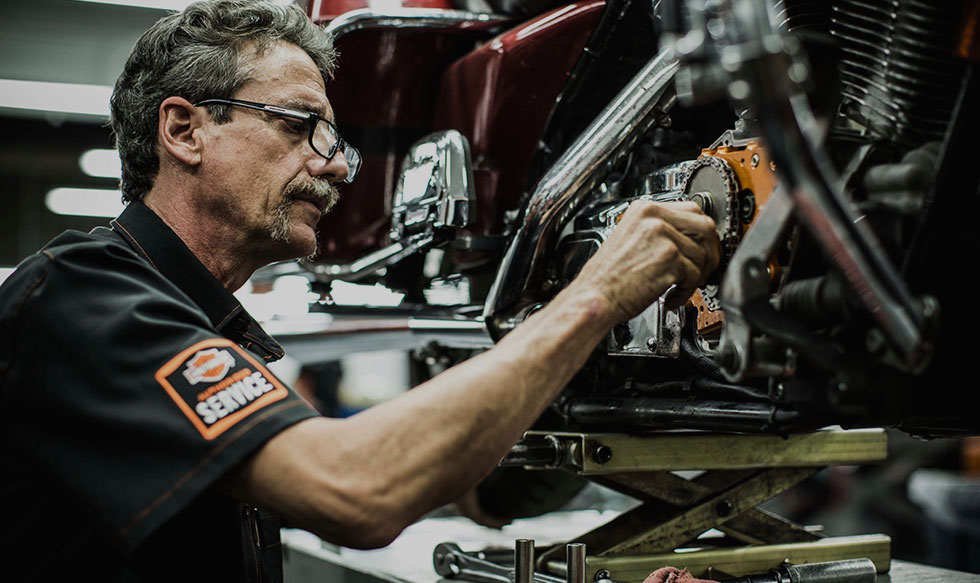
To become a Harley-Davidson mechanic, complete motorcycle technician training — ideally through Harley-Davidson University’s partnership programs like the one at Motorcycle Mechanics Institute (MMI), which takes about 12 months — then get hired at a Harley dealership for hands-on apprenticeship and factory certification. Most people go from beginner to working Harley tech in 1–2 years. Dealership experience plus Harley-specific factory training is what separates a general motorcycle mechanic from a true Harley technician.
Harley-Davidson isn’t just another motorcycle brand to its technicians — it’s a culture with its own technology, from Milwaukee-Eight engines to the LiveWire electric platform, and its own fiercely loyal customer base. Factory-trained Harley techs are in steady demand because Harley owners overwhelmingly prefer dealership service, and the brand’s dealer network spans every state.
What Harley Mechanics Actually Do
Harley technicians diagnose and repair everything on the bike: engines, transmissions, fuel and electrical systems, suspension, brakes, and increasingly the electronics and infotainment systems on touring models. The work blends old-school mechanical skill — valve adjustments, engine rebuilds — with modern diagnostics using Harley’s Digital Technician software.
Day to day, you’ll handle scheduled maintenance (the bread and butter: oil, tires, brakes, the 1,000/5,000/10,000-mile services), warranty repairs, performance upgrades (Stage kits are hugely popular), and custom work. Customer interaction matters more here than in car repair — Harley owners are passionate and particular, and explaining work clearly builds the repeat business dealerships depend on.
Step-by-Step: How to Become a Harley Mechanic
- Get a high school diploma and build mechanical aptitude. Shop classes, auto courses, and wrenching on your own bike or car all count. Basic math and reading comprehension matter more than people expect — you’ll read dense service manuals daily.
- Complete motorcycle technician training (about 12 months). The gold standard is a Harley-Davidson-endorsed program. Harley-Davidson University partners with technical schools — most notably Motorcycle Mechanics Institute (MMI), which offers a dedicated Harley-Davidson program covering factory systems, diagnostics, and late-model technology.
- Earn Harley-Davidson factory certifications. Through Harley-Davidson University’s PhD (Professional Development) program, techs progress through certification levels — from maintenance-level to master technician — via online courses and hands-on assessments.
- Get hired at a Harley-Davidson dealership. Dealerships are the primary employers. Many students get hired through school career services before graduation. Expect to start on maintenance and inspections while senior techs mentor you on complex diagnostics.
- Build experience toward senior/master tech status. With 3–5 years of dealership experience plus advanced factory certifications, you qualify for lead technician, shop foreman, or service manager roles — each a meaningful pay jump.
Training Options Compared
Harley-endorsed programs (MMI’s Harley-Davidson program and similar) offer the most direct path: manufacturer-specific curriculum, factory training aids, and recruiting pipelines into dealerships. General motorcycle mechanic programs teach broader skills across brands (Honda, Yamaha, etc.) — valuable versatility, but you’ll still need Harley-specific training afterward. Community college automotive programs are the budget option but rarely cover motorcycles in depth.
Program costs typically run $20,000–$40,000 for dedicated motorcycle technician training. Compare that carefully against expected starting pay, and ask schools for graduation and job-placement rates before enrolling — reputable programs publish them.
Salary Outlook for Harley Mechanics
Motorcycle mechanics earn a median of roughly $45,000 per year nationally per BLS data for small engine and motorcycle mechanics, with experienced Harley dealership techs typically earning $50,000–$70,000. Top master technicians at high-volume dealerships, especially those paid on flat-rate (paid per job completed rather than per hour), can exceed $75,000. Service managers clear $70,000–$90,000+.
Flat-rate pay rewards speed and skill — efficient techs beat the book time and effectively raise their hourly rate. Many dealerships also offer performance bonuses tied to customer satisfaction scores and efficiency, which can add several thousand dollars annually for top techs. Benefits at dealerships usually include health insurance, 401(k), paid training, and employee discounts on bikes and gear (a serious perk for riders). High-cost metro areas pay more; independent shops may pay less than dealerships but offer more varied work.
Harley wrenching pairs naturally with other skilled trades. If you like hands-on technical work, see how welding works for the science behind fabrication, how much welding school costs for another trade-school path, and how long it takes to become a plumber for a comparable skilled-trade timeline.
Frequently Asked Questions
Common questions about the Harley mechanic career path.
Do you need to be Harley-certified to work on Harleys?
Legally, no — independent shops work on Harleys without factory certification. But Harley-Davidson dealerships strongly prefer or require Harley-Davidson University training, and certification is what unlocks warranty work, the best dealership jobs, and master tech status.
How long does it take to become a Harley mechanic?
About one year of full-time technical training, plus 1–3 years of dealership experience to become a proficient, well-rounded technician. Reaching master technician level typically takes 4–6 years total.
Is being a motorcycle mechanic a good career?
For people who love motorcycles, yes — it’s stable, hands-on work with a clear advancement ladder and a passionate customer base. The pay is solidly middle-class rather than lucrative, so go in for the craft and the culture, not to get rich. The work is physical — expect to be on your feet all day — but dealership environments are generally cleaner and better equipped than general repair shops.
Can you become a Harley mechanic without going to MMI?
Yes. Alternatives include other Harley-endorsed programs, general motorcycle mechanic schools followed by dealership training, or working up from an entry-level shop helper position. MMI’s Harley program is simply the most direct and widely recognized route.